


By Robert Tate, award-winning automotive historian and researcher
Images courtesy of Henry Ford Media Center Archives, Com E Class Auto.com
Published 5.27.2026
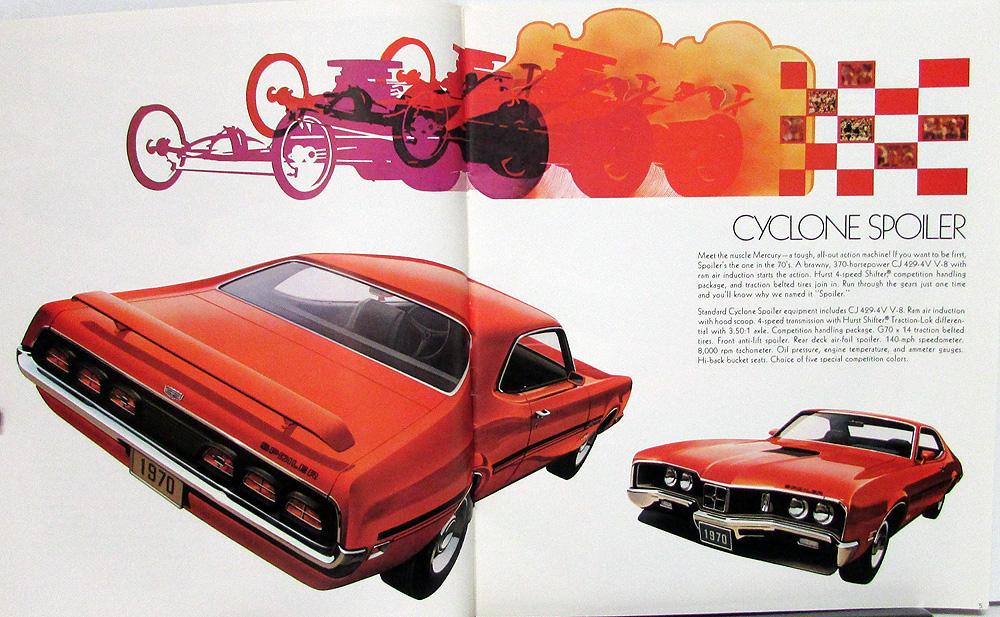
1970 Mercury Cyclone Spoiler Orange illustration
The Mercury Cyclone Spoiler models came with high-back bucket seats, an air scoop and a rear spoiler that gave the cars a distinctive appearance. In 1970, the Mercury Cyclone sold for $3,759. Mercury later introduced the Cyclone X-100, which featured a 429-engine designed for muscle car performance.
During the same year, only 1,695 buyers purchased the Cyclone model. The Cyclone shared many similarities with the 1970 Mercury Montego intermediate models. Automotive historians have described the Cyclone and Montego as some of Mercury’s most dependable and roadworthy cars of the era, including several successful race cars. The 1970 Cyclone was built on the Ford Torino platform.
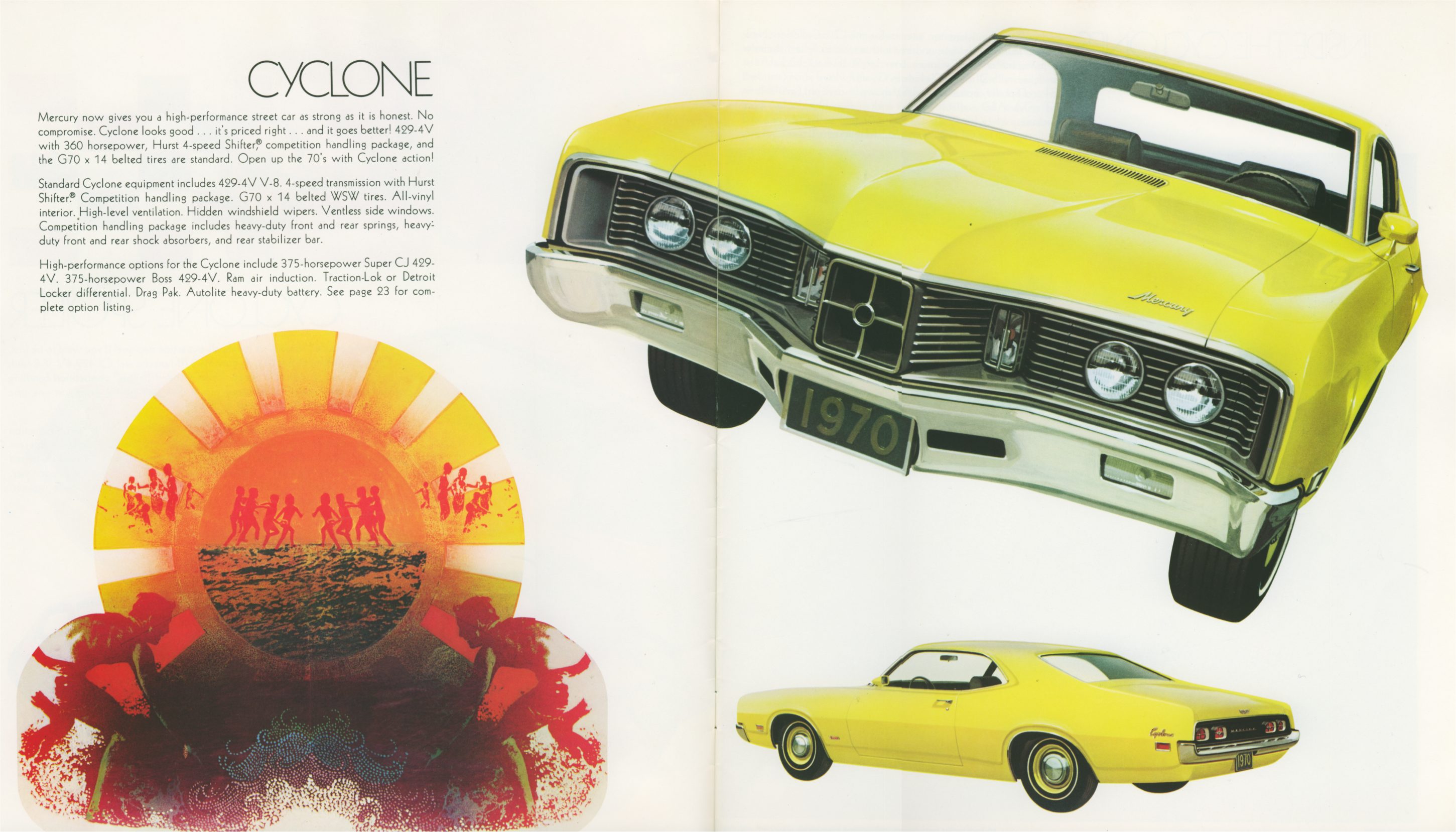
1970 Mercury Cyclone -Yellow illustration
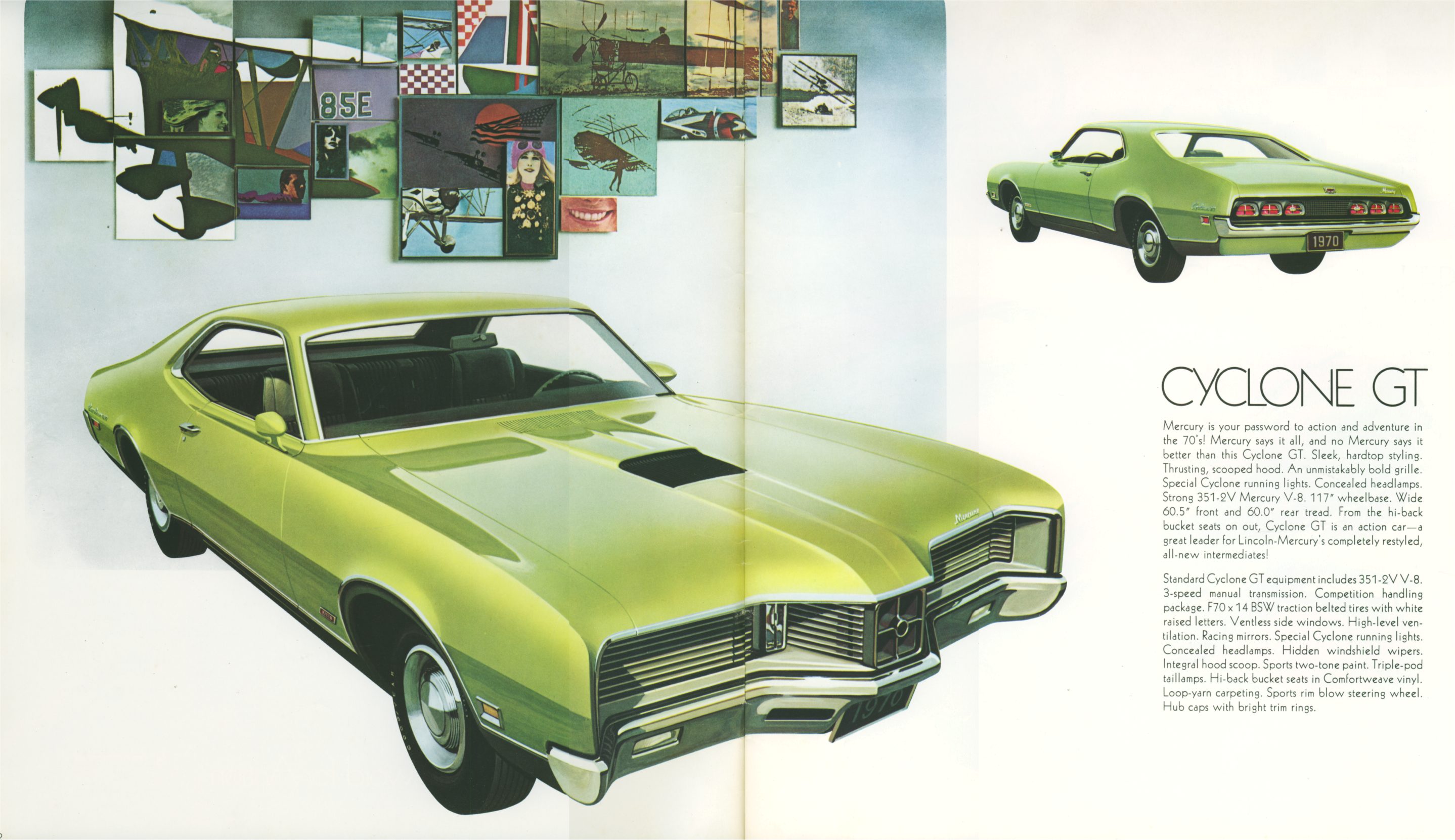
1970 Mercury Cyclone- Green illustration
The 1970 Mercury Cyclone featured long, sleek lines that appealed to muscle car enthusiasts. The Mercury Cyclone Spoiler II show model was designed by automotive stylist Larry Shinoda.
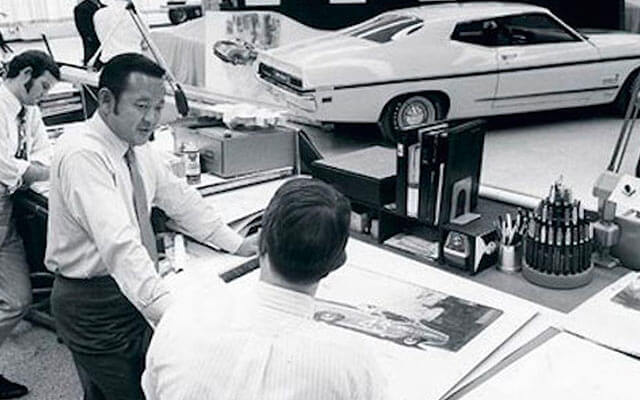
Larry Shinoda- inside Ford Design Studio
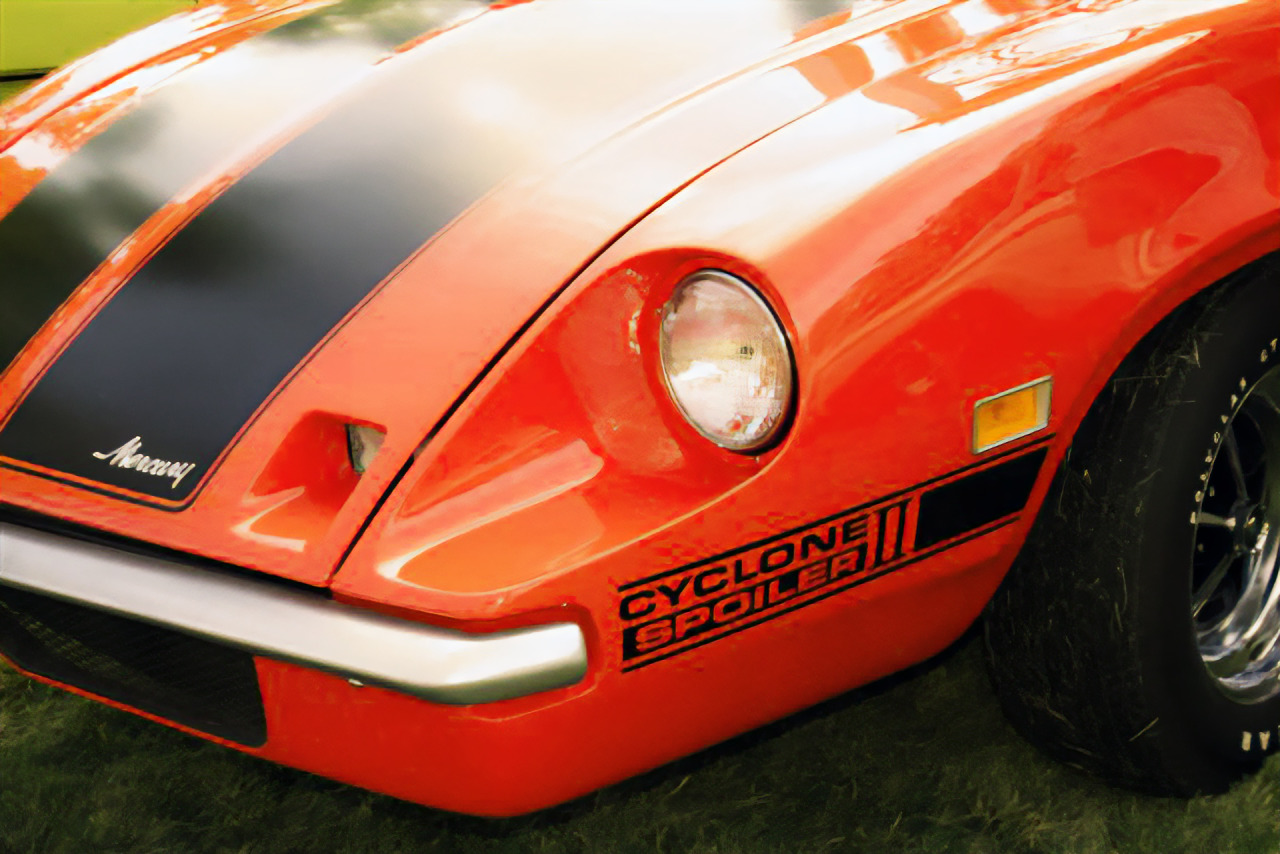
1970 Mercury Cyclone Spoiler II front end
Larry Shinoda built an impressive automotive design career at General Motors. He played a major role in developing the split-window 1963 Chevrolet Corvette Sting Ray and became known for his high-performance and aerodynamic vehicle designs. The 1970 Mercury Cyclone was considered part of the fourth generation of Cyclone models.
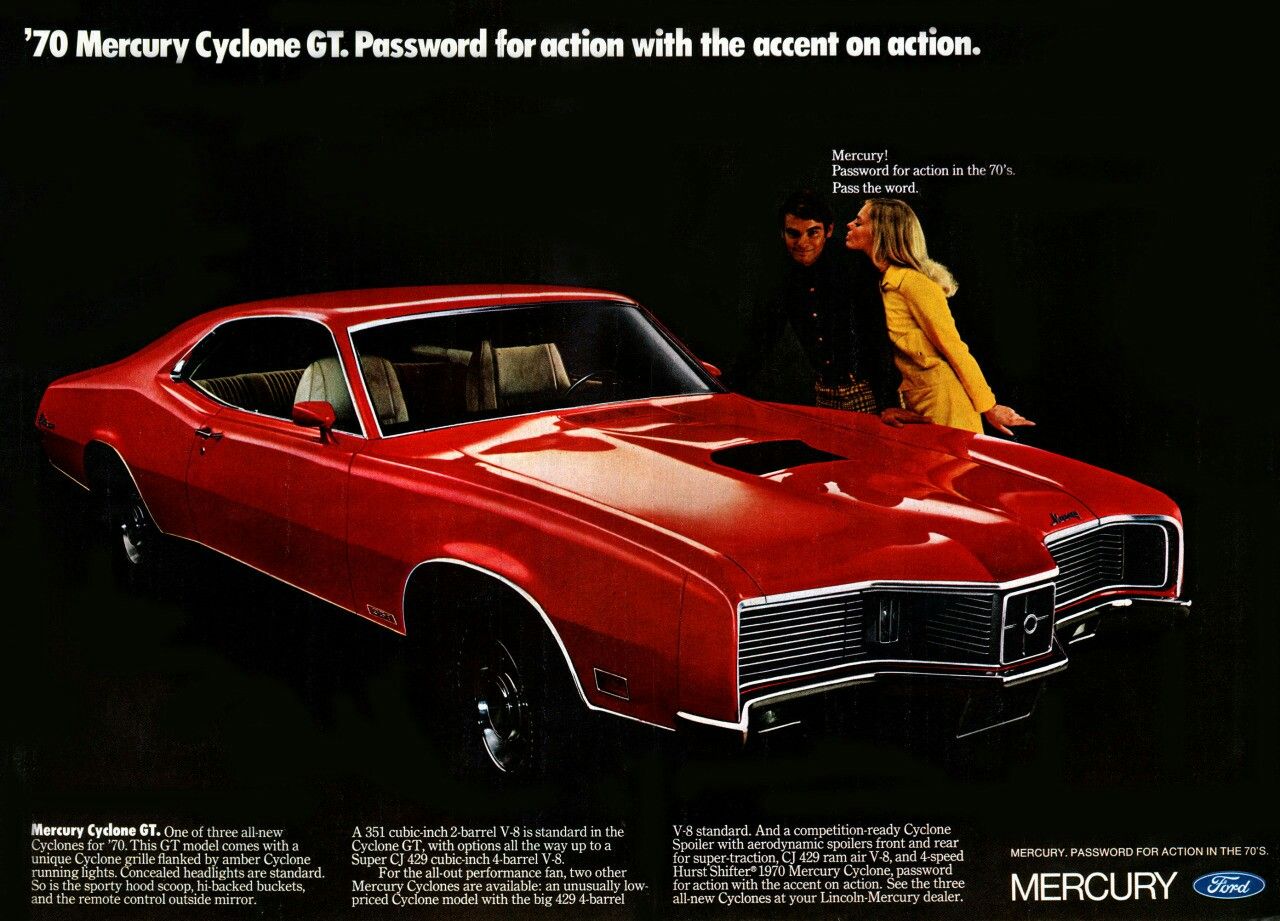
1970 Mercury Cyclone advertising (GT Password)
The models were promoted as Mercury’s high-performance midsize muscle cars. Advertising for 1970 highlighted the Mercury Cyclone with its sporty styling, rear spoiler and available 429 Cobra Jet V-8 engine rated at 370 horsepower.
The 1970 Mercury Cyclone models were known for their bold styling and performance appearance. The Cyclone Spoiler became one of the car’s most recognizable features and was admired by many younger drivers at the time. Buyers could also order black or white racing stripes that complemented the functional hood scoop. In 1970, the Cyclone series remained Mercury’s primary muscle car offering for consumers.
In 1971, Mercury discontinued the Mercury Cyclone series from the Ford Motor Company product lineup. The final generation of the Cyclone lasted from 1970 to 1971. The 1971 models featured an extended front bumper design, although the overall body styling remained largely unchanged.
By 1972, many American consumers were looking for more fuel-efficient vehicles. As a result, muscle cars began to decline in popularity and automotive sales across the industry started to slow.
Today, many Mercury enthusiasts and collectors still admire the styling and performance of the 1970 Mercury Cyclone models. Collectors have often said the cars are difficult to find, making them highly desirable among classic muscle car enthusiasts.
Bibliography
Dammann H. George. “Fifty Years of Lincoln Mercury” Crestline Publishing 1971.
Kowalke Ron. “Standard Guide to American Muscle Cars A supercar source book 1960-1995” Krause Publications 1996.
Langworth M. Richard. “Encyclopedia of American Cars 1930-1980” Beekman House 1984.
Frumkin MJ. “Classic Muscle Car Advertising The Art of Selling Horsepower” Krause Publications 2002.