

By: Robert Tate, award-winning automotive historian and researcher
Images courtesy of Chrysler Corporation Historical Collection MMC Detroit.
MotorCities Story of the Week
One of the greatest automotive design pioneers affiliated with the history of the American automobile was the late Mr. Virgil Exner, who was born Sept. 24, 1909, and died Dec. 22, 1973.
Mr. Virgil Exner was responsible for much of Chrysler’s Forward Look styling during the 1950s. He became Chrysler’s vice president and director of styling in 1957, after serving as the company’s styling chief. Exner and his design team helped transform Chrysler’s automobiles with lower, longer and more dramatic designs that featured sweeping lines and tail fins.
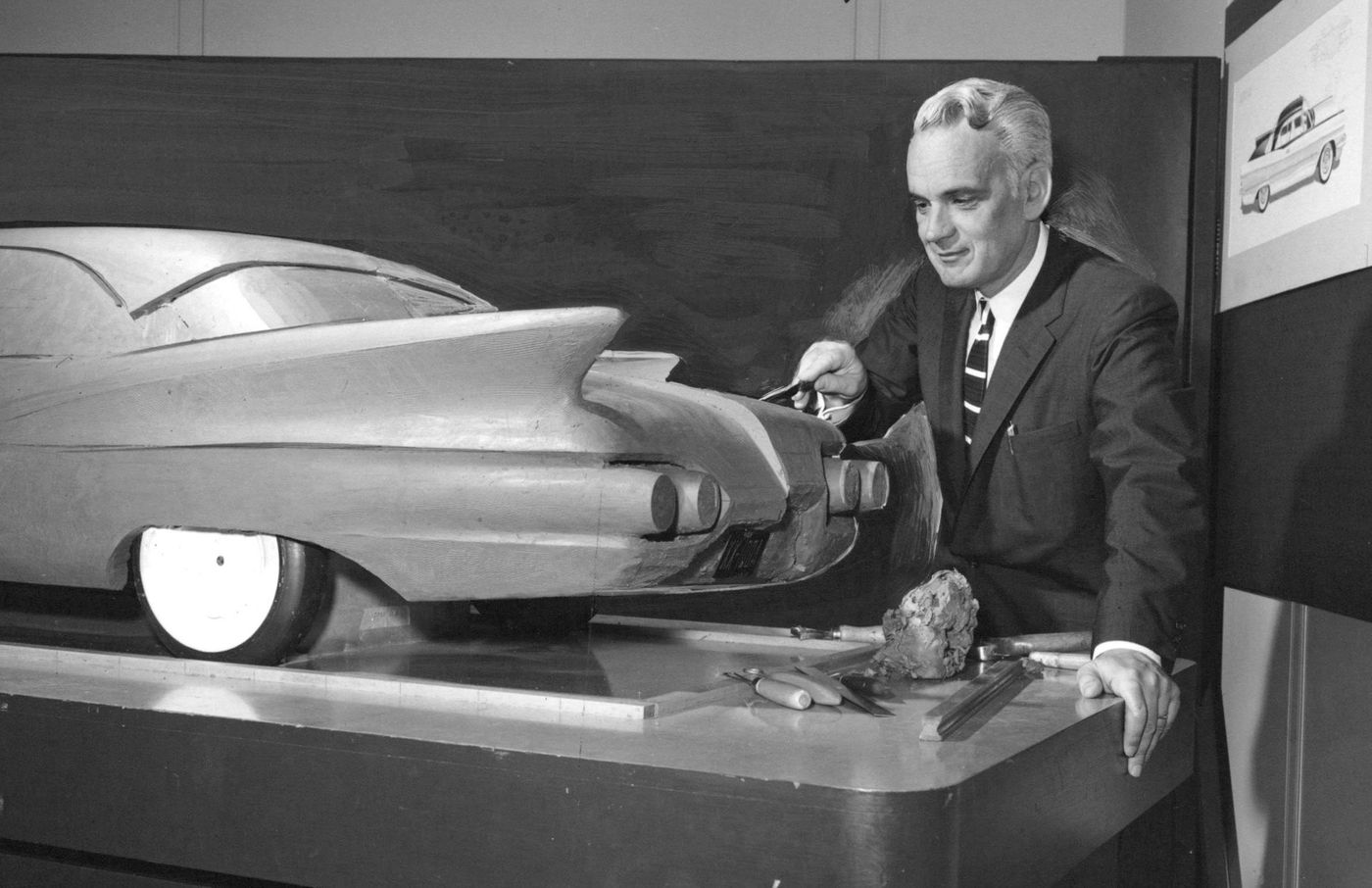
Virgil Exner working with design.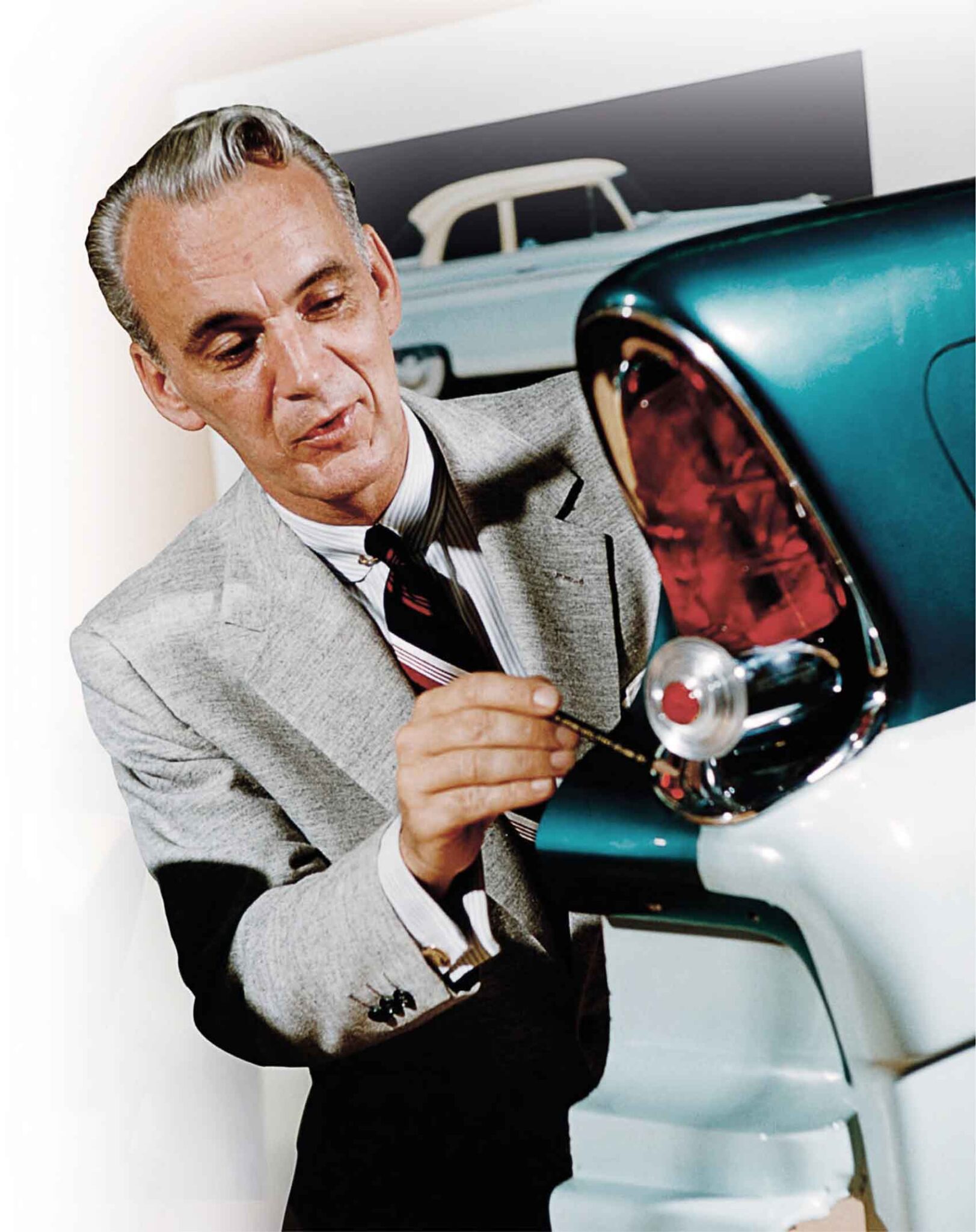
Virgil Exner working with a 1955 Plymouth design.
In 1955, Chrysler introduced its new models with what the company advertised as the “Hundred Million Dollar Look.” The redesign represented a major change for Chrysler and helped restore public interest in the company’s automobiles. That same year, Chrysler introduced the 300, a high-performance model that established an important place in Chrysler’s performance history and became one of the most memorable automobiles of the decade.
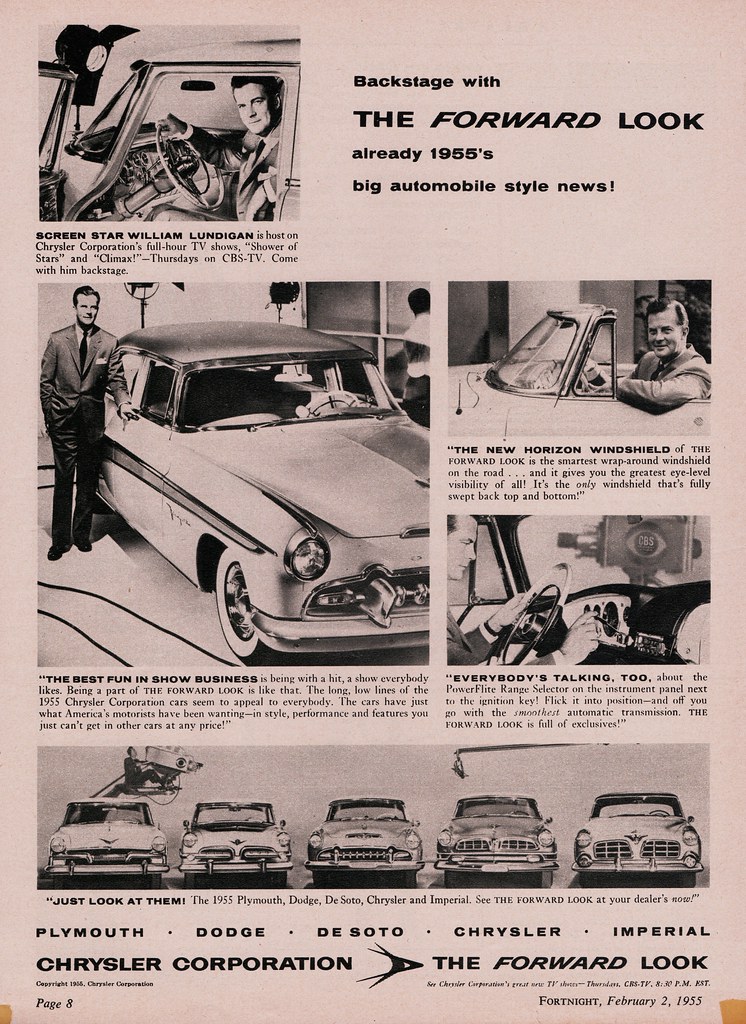
The Forward Look advertising for 1955.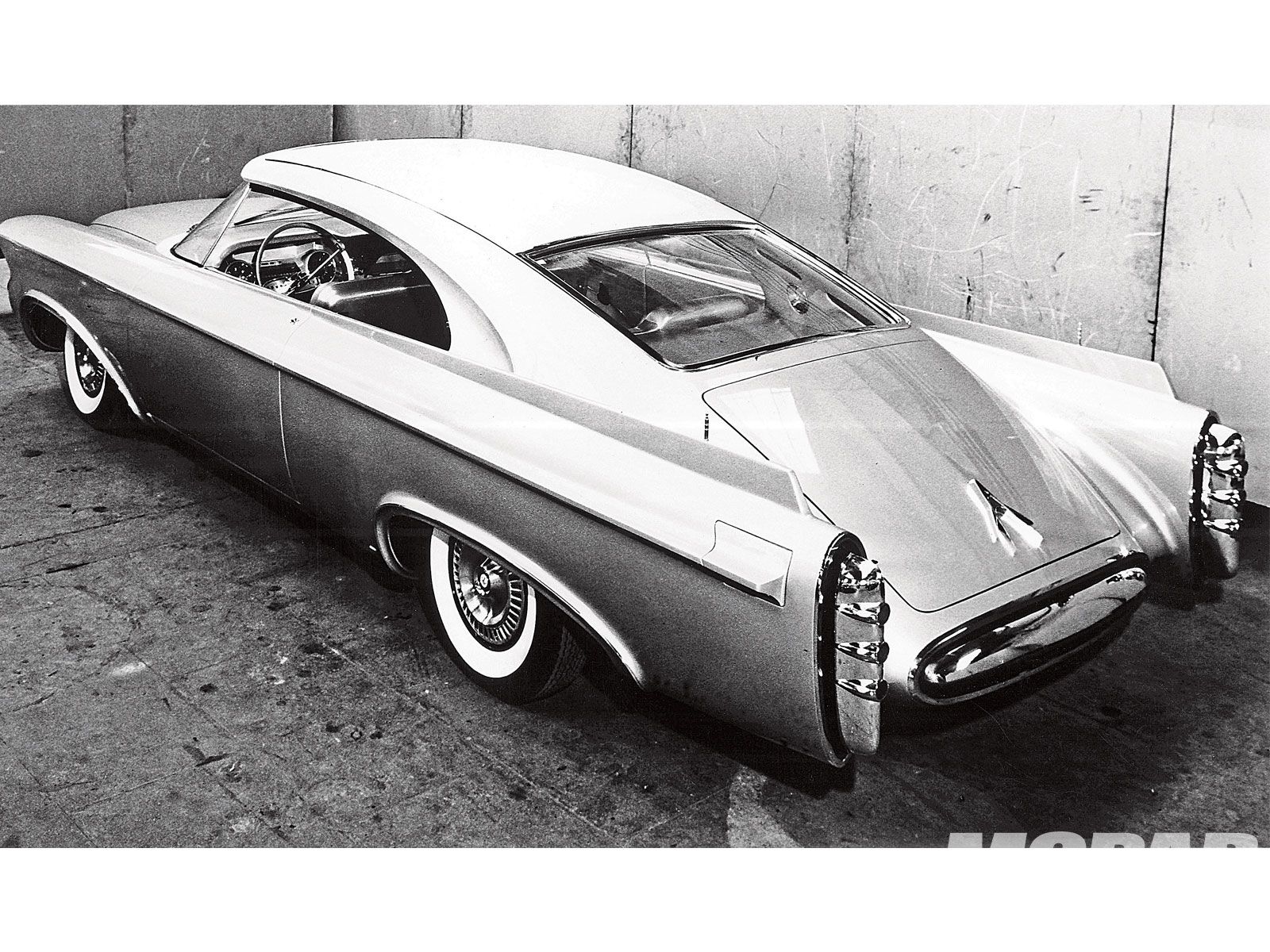
1956 Chrysler Norseman concept model from Ghia.
Exner also helped develop a series of great-looking concept cars. One of the most fascinating was the Chrysler Norseman, a futuristic concept designed by Chrysler and constructed by the Italian coachbuilder Ghia. Unfortunately, the Norseman never made it to a public auto show. It was being transported from Italy to the United States aboard the SS Andrea Doria when the ocean liner collided with another ship and sank off the Massachusetts coast in July 1956. The Norseman went down with the ship and was never recovered.
For 1956, Chrysler promoted another styling theme known as “PowerStyle,” while the Forward Look remained an important part of the company’s overall design identity. The 1956 Chrysler models were substantially updated versions of the 1955 designs, with changes to the grilles, trim and other exterior details.
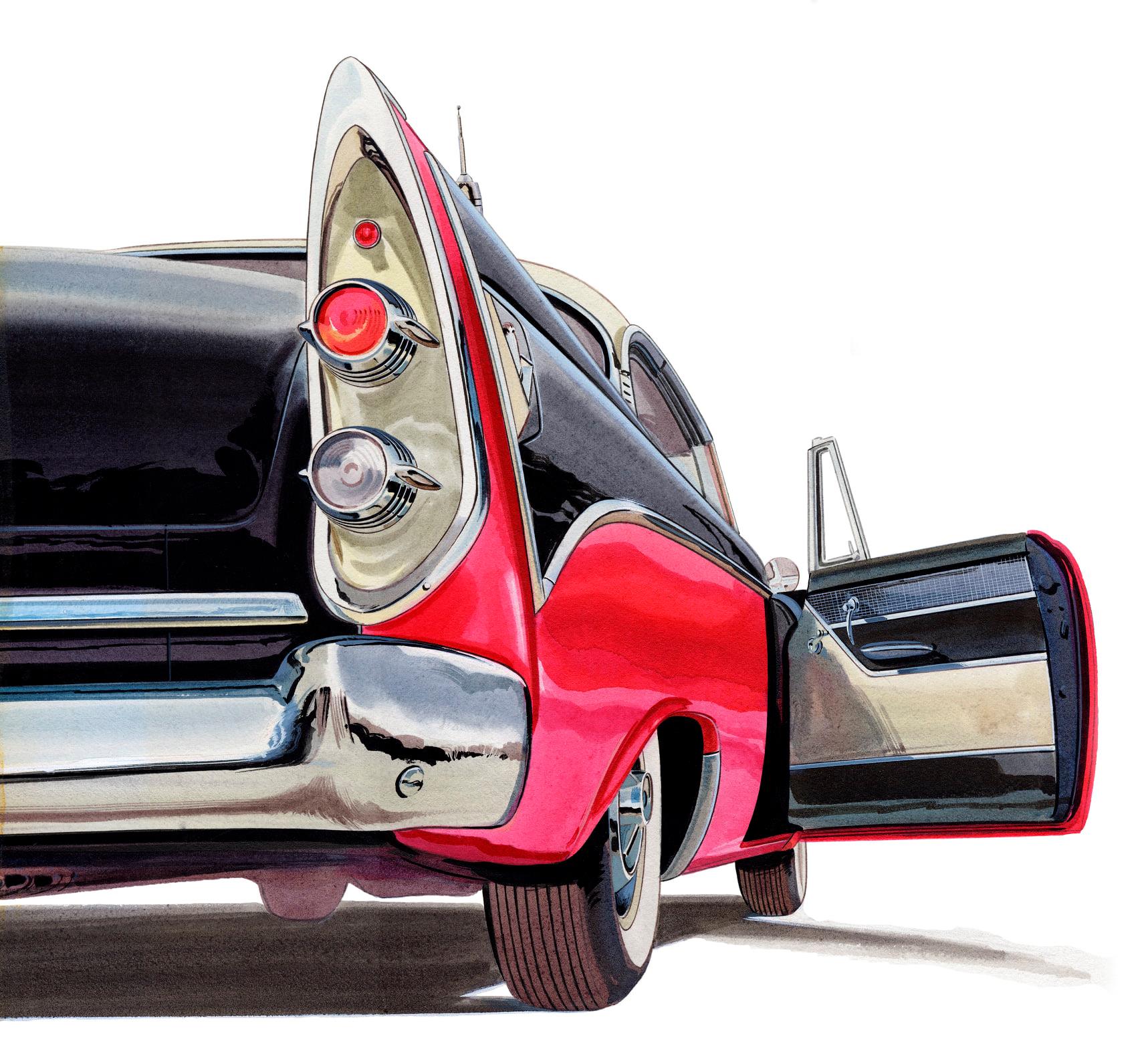
Rear end illustration for the 1956 Dodge.
The 1956 Imperial models were great-looking designs. I especially liked the way the taillights were integrated into the rear fenders. Chrysler continued developing its powerful Hemi engines during this period. The company’s first-generation FirePower Hemi had been introduced in 1951, and Hemi engines became an important part of Chrysler’s performance reputation during the 1950s.
In 1956, the DeSoto Fireflite also became the official pace car for the Indianapolis 500. The special Fireflite was finished in gold and white and paced the field for the 500-mile race at Indianapolis Motor Speedway on May 30, 1956.
In 1955, the Dodge division introduced the Dodge La Femme, a special trim package intended to appeal specifically to women buyers. The La Femme was offered for the 1955 and 1956 model years. The 1955 version was finished in Heather Rose and Sapphire White and featured a distinctive pink rosebud interior. It also came with accessories such as a raincoat, umbrella, rain cap and other personal items.
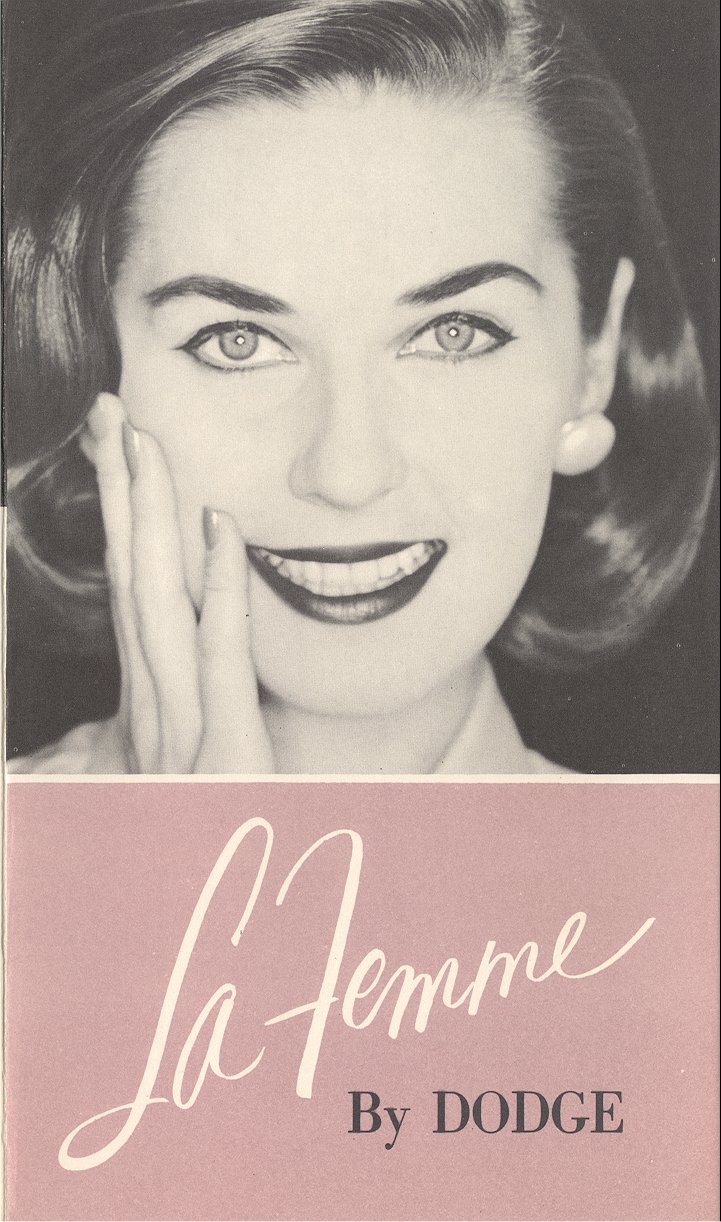
1956 Dodge La Femme sales material
The La Femme was an interesting example of how Chrysler’s marketing department attempted to reach the growing female automobile market. However, the package was discontinued after the 1956 model year. Because La Femme was an option package rather than a separate model line, exact production numbers are difficult to establish, although historians generally agree that relatively few were built.
The 1957 Chrysler line created a huge sensation with the buying public. DeSoto introduced a great-looking new line for 1957, and I have always thought the styling was an artistic achievement. The dramatic tail fins and low, sweeping body gave the cars a futuristic appearance that helped define the second generation of Chrysler’s Forward Look.
One of the popular 1957 DeSoto models was the Firedome four-door sedan. It sold for $2,958, and 23,339 examples were produced during the 1957 model year.
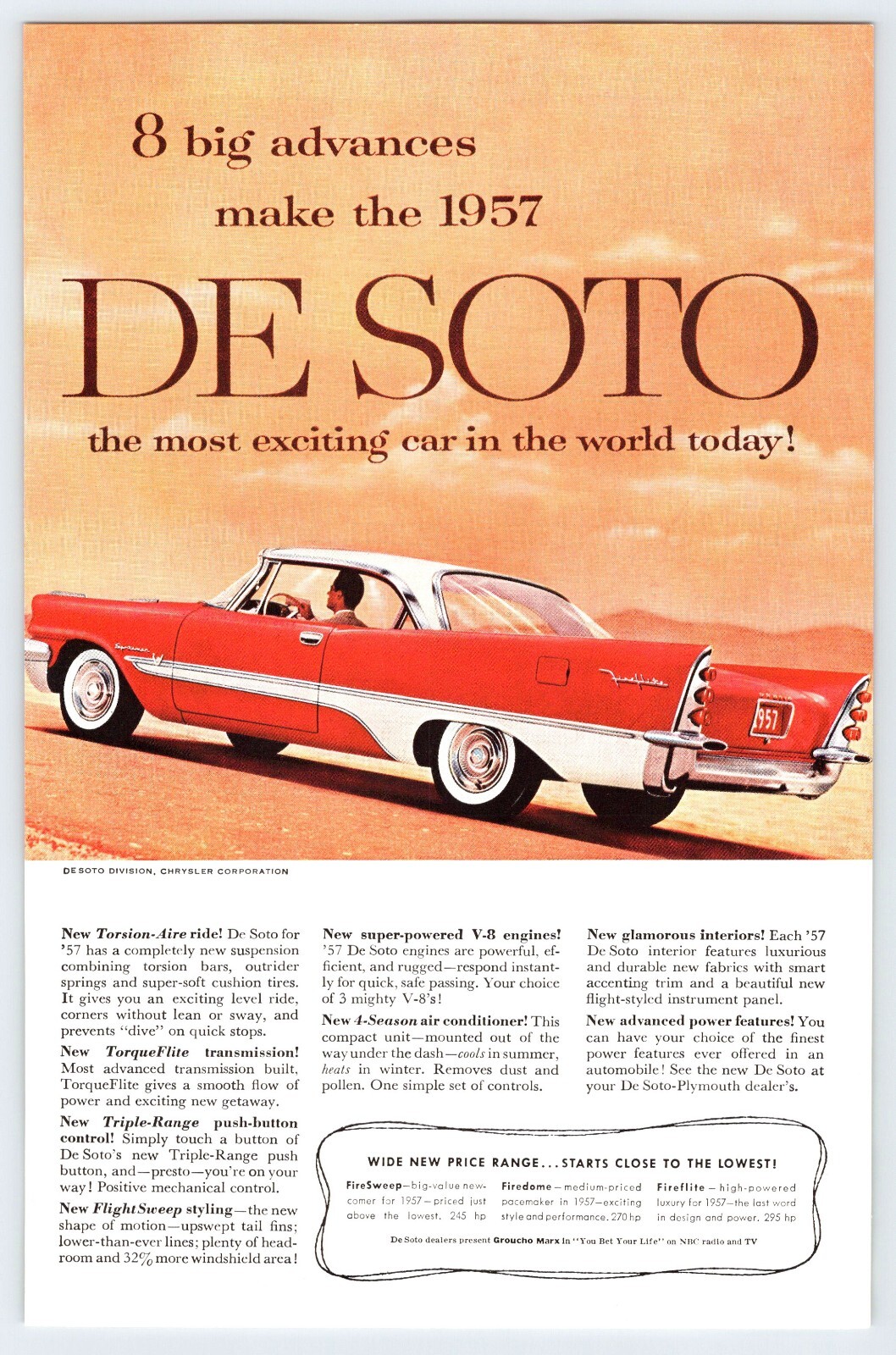
1957 De Soto advertising
For 1957, Plymouth had a remarkable year. Plymouth sales increased 44.3%, allowing the division to move back into the No. 3 position in the American automobile sales race, ahead of Buick and behind Chevrolet and Ford. The new Plymouth styling was one of the major successes of the Forward Look program.
The 1957 Chrysler products also introduced styling and engineering features that made a major impression on the automobile industry. Chrysler offered quad headlamps where permitted by state law, along with its new Torsion-Aire suspension system. The low rooflines, sweeping body shapes and dramatic tail fins gave the 1957 models a futuristic appearance that still attracts collectors and enthusiasts today.
I always thought the 1957 Chrysler Imperial was one of the best-looking designs of the 1950s. There was something about the proportions, the long body, the dramatic fins and the overall presence of the Imperial that made it stand out from the other automobiles of its time.
The 1958 model year was unfortunately affected by a national recession, and automobile sales declined sharply. Even so, the 1958 Plymouth remained an important part of the Forward Look story. Plymouth continued to promote its automobiles with the “Ahead for Keeps” advertising theme, and actress Betty White became one of the personalities associated with Plymouth advertising that year.
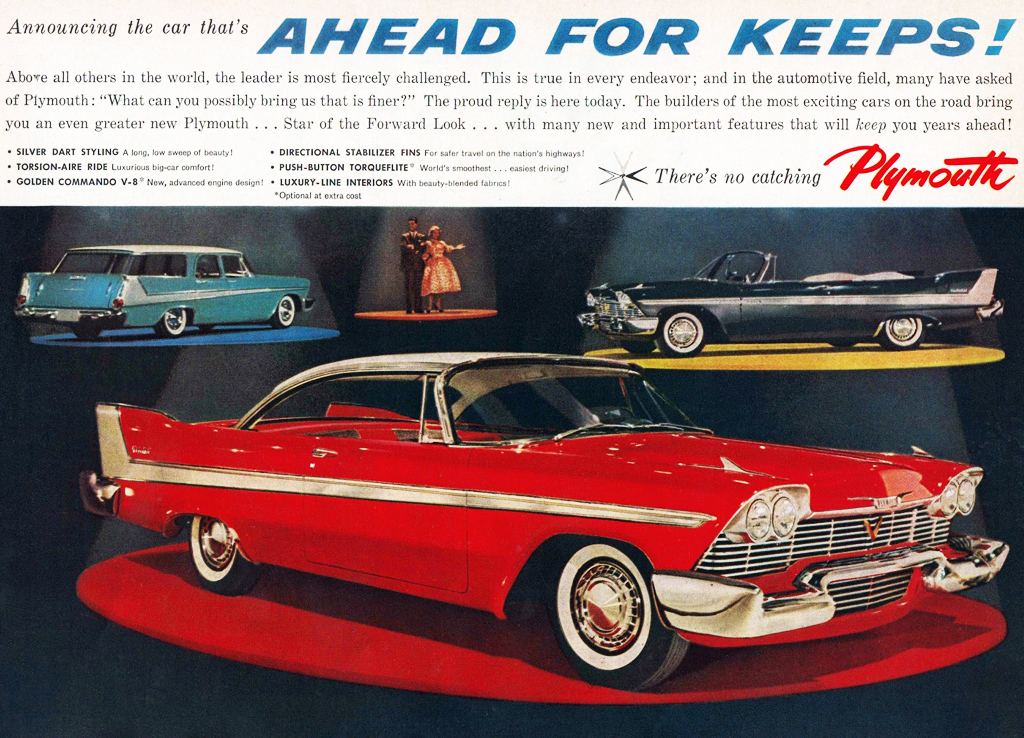
1958 Plymouth “Ahead for Keeps” advertising
The 1958 Chrysler models received updates rather than another complete redesign. The cars carried forward much of the basic 1957 styling, with changes that included revised trim, grilles and other details. The 1958 Plymouth also became famous for another reason many years later.
In 1983, director John Carpenter brought Stephen King’s novel Christine to the big screen. The movie featured a red-and-white 1958 Plymouth Fury named Christine. The automobile became one of the most recognizable movie cars in American popular culture.
For 1959, Chrysler invested approximately $150 million in updating its automobile line. The Plymouth line received significant styling changes as Chrysler continued trying to keep its products competitive in a rapidly changing automobile market.
Unfortunately, the success of the 1957 designs was followed by serious quality-control and corrosion problems. Chrysler had rushed the new models into production, and problems with body fit, finish and rust damaged the company’s reputation. These problems, combined with the 1958 recession, contributed to a difficult period for Chrysler.
In conclusion, Virgil Exner had a great vision for how an automobile should look. His designs changed the appearance of Chrysler products and helped establish the company as one of the most important styling forces in Detroit during the 1950s. The 1957 models remain a perfect example of Exner’s vision. I still believe the 1957 Chrysler Imperial was one of the finest-looking automobiles of the 1950s, and that is one reason why Virgil Exner’s work continues to be remembered by automotive enthusiasts today.
Bibliography
Daimler Chrysler. “75 Years of Automotive Distinction 1924-1999” Daimler Chrysler 1000 Chrysler Drive Auburn Hills Michigan 48326.
Langworth M Richard. Norbye P. Jan. “The Complete History of Chrysler Corporation 1924-1985” 1985 Beekman House Publication.
Langworth M. Richard. “Chrysler and Imperial The Postwar Years” Motorbooks International 1976.
Butler Donald. “The Plymouth-De Soto Story” Crestline Publishing 1978.
The Italian CoachBuilder Site
Hagerty.com Plymouth Price Guide
Chrysler 300 still in ‘a class all its own’
MotorCities Story of the Week: 1957-1958 Were Good Years for Plymouth Styling
MotorCities Story of the Week: 1957 Chrysler Models Were Great Looking Cars