
By Robert Tate Award Winning Automotive History Researcher.
Images Courtesy of Boulevard Photographic
Published 3.18.2026
From the 1950’s-1970’s, one of the finest and most influential automotive photography firms in the world was Boulevard Photographic located in Detroit, Michigan. The company was created by automobile photographers Jimmy Northmore and Mickey McGuire. The company began working with General Motors, Chrysler, and Ford Motor Company introducing new sales and marketing photographic ideas. The firm had great success in creating beautiful works of automobile photography as it rose to be considered the top of the field across the country.
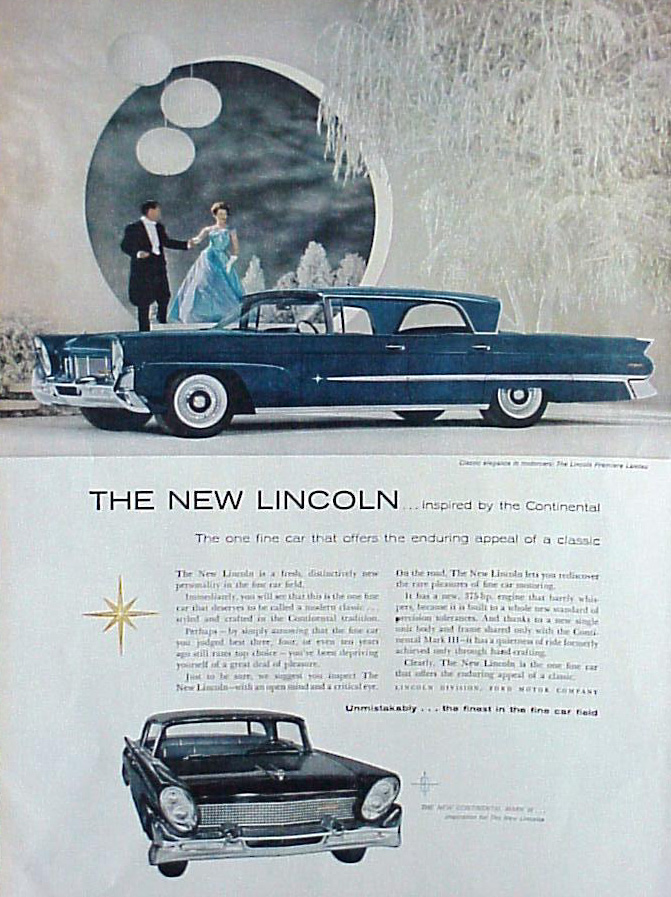 1958 Lincoln advertising (The new Lincoln)
Mickey McGuire dropped out of college in 1948 and went to work as a photographer however he still made his dreams come true as a great automotive photo journalist. Mickey soon met Jimmy Northmore who was managing facilities at a photography studio. Both had photography backgrounds and wanted their own studios. Though they had different personalities, their shared ambition made them a great team. Mickey McGuire once said that “Jimmy Northmore was the inventor and mechanical wizard, solving some of the early challenges they faced in proving themselves and photography to clients”. Some automotive historians have said that Mr. Northmore and Mr. McGuire not only advanced the art of automotive advertising, but they also made a tremendous contribution to conserving automotive history. Some of the most striking, stunning and memorable photography from Boulevard photographic were introduced in the 1950’s and early 1960’s.
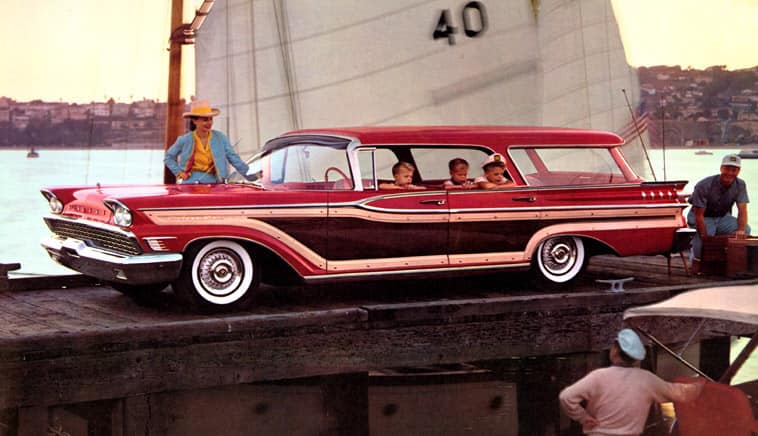 1959 Mercury Red station wagon
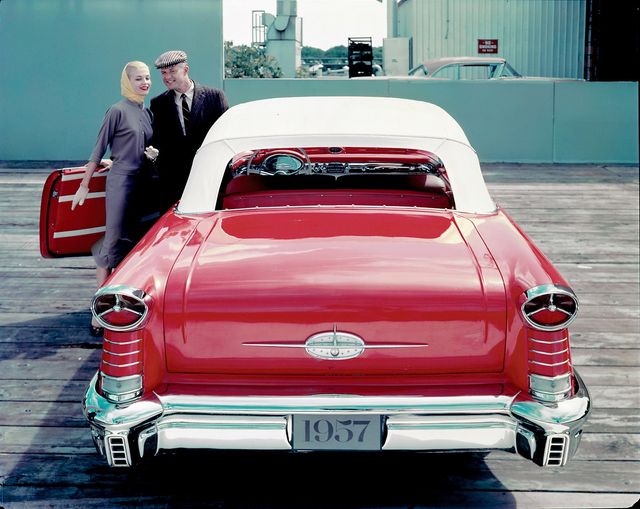 1957 Oldsmobile Rear End
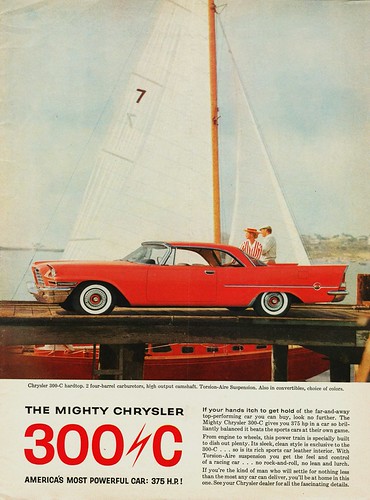 1957 Chrysler 300
Jimmy Northmore and Mickey McGuire were both “car guys” and there work was reflected in there agency. They worked with a wide range of American and imported automobile accounts that helped the company to move forward.
Many of the popular 1960’s-1970’s automotive sales material and advertising information were created by Boulevard Photographic. One of the most popular photographs was the image of the 1967 Chevrolet Camaro which highlighted the interior of the vehicle with a young couple standing next to the model.
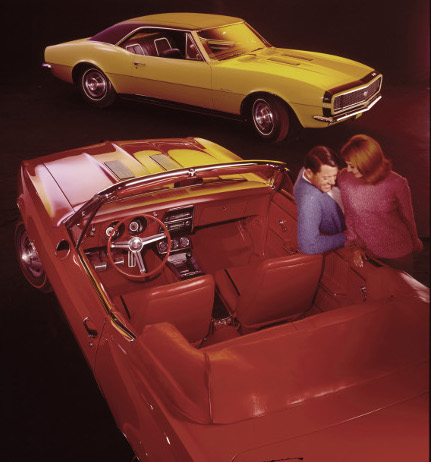 1967 Camaro 2 cars with couple standing next to the vehicle
Another popular image Boulevard Photographic image was the 1970 Ford Mustang that was taken in Palm Springs California. The photographs were part of a light-hearted Ford Motor Company campaign that aimed to say that anyone with a Mustang was bound to get more than their fair share of attention.
The Boulevard Photographic agency was around for many years, and they helped to create new ideas in automotive photography. However, as they approached the 1980s and 1990’s, many of the client companies brought their work in house. Automotive advertising started to change with new ideas from new ways to digitize automotive advertising.
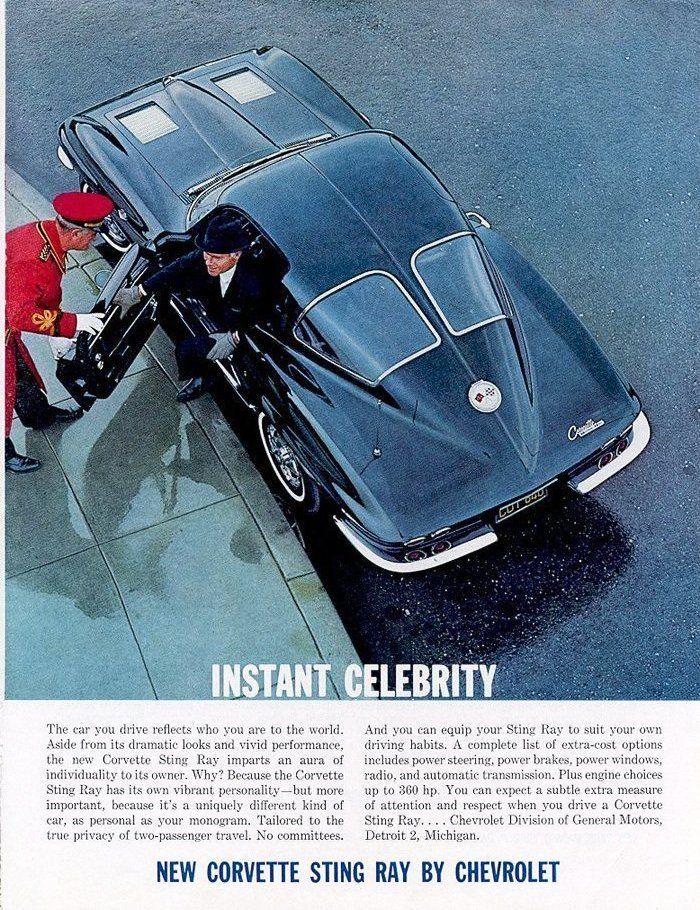 1963 Corvette - "Instant Celebrity" advertising.
In 1996, the Detroit Institute of Arts introduced an exciting and memorable exhibition titled “The Car And The Camera” The Detroit School Of Automotive Photography. The exhibit was organized by the Detroit Institute of Arts and made possible by the Ford Motor Company with additional support from the Michigan Council for Arts and cultural affairs, I was there and I thoroughly enjoyed the exhibit which featured great works of photography by Boulevard Photographic. All the surviving negatives were donated to the National Automotive History Collection of the Detroit Public Library. In my time working at the NAHC, I had to privilege to process all of the images of that collection.
Today automobile advertising is created through a combination of digital platforms. Today the automobile industry is shifting towards online platforms. Many companies will use social media engagement and personalized marketing to sell their products. For a the better part of 3 decades, Boulevard Photographic was the best in the business. The automobile photography that was used in advertising and sales material years ago changed the way we looked at the automobile that expanded our dreams and visions of what Americans wanted to drive.
Biography
Williams Jim. “Boulevard Photographic The Art of Automobile Advertising” MBI Publishing Company 1997.
Lewis L. David & Raubauser Bill. “The Car and the Camera The Detroit School of Automotive Photography” The Car and the Camera Exhibit Wayne State University Press 1996.