



Story was Rewritten and Edited by MotorCities National Heritage Area Staff
Original Story by the late Robert Tate, an award-winning automotive historian and researcher
Images courtesy of Robert Tate’s Automotive History Collection, unless otherwise noted.
View original content, click here
MotorCities Story of the Week
In 1942, Americans were turning their attention to the war effort. Before Studebaker's assembly lines shut down for the duration of World War II, the company had already begun shifting its focus toward military production. On Jan. 31, 1942, production of civilian automobiles ceased, marking the end of an era for Studebaker until peacetime production could resume.
The 1942 Studebaker models, introduced in the fall of 1941, were designed under the direction of Raymond Loewy Associates, with contributions from designers Bob Bourke (1916-1996) and Virgil Exner (1909-1973). Exner later joined Chrysler in 1949. The 1942 lineup included the Champion, Commander and President series. Depending on the series, body styles included three-passenger coupes, five-passenger coupes, Club Sedans, Cruising Sedans and Land Cruisers.
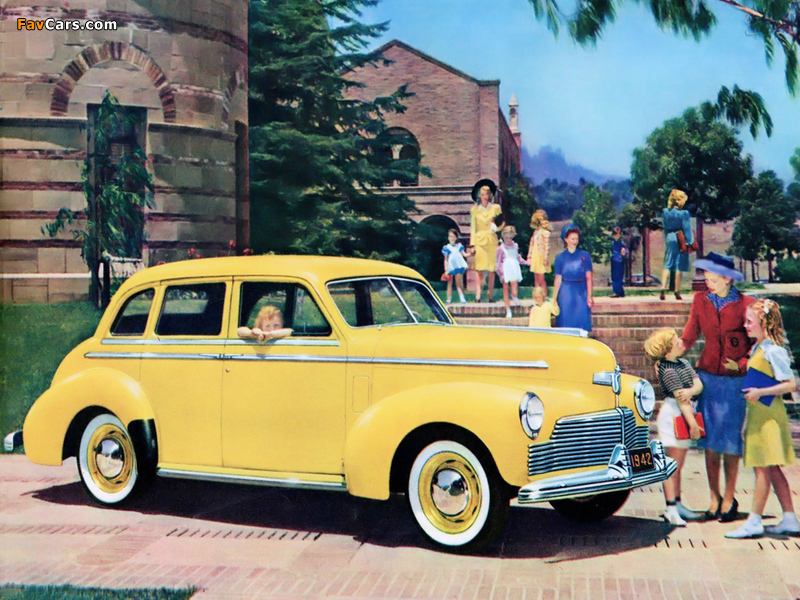
1942 Studebaker Yellow Sedan
The various models offered different levels of trim and equipment. The Skyway models represented the upper end of the lineup, with features such as fender-mounted directional signals, fender skirts and whitewall tires. The Champion, with its more affordable pricing and practical design, remained an important part of Studebaker's passenger car lineup.
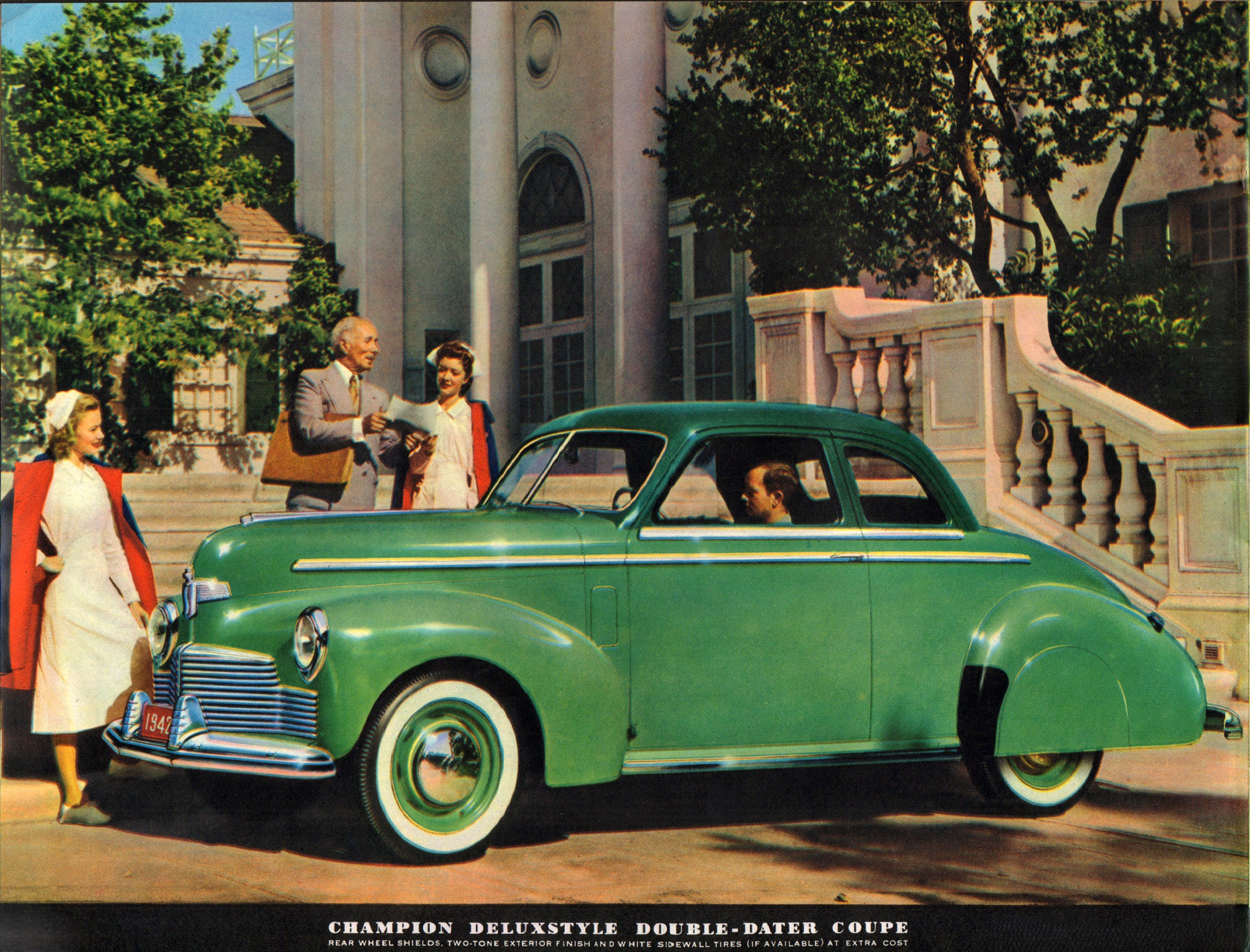
1942 Studebaker model in Green Champion
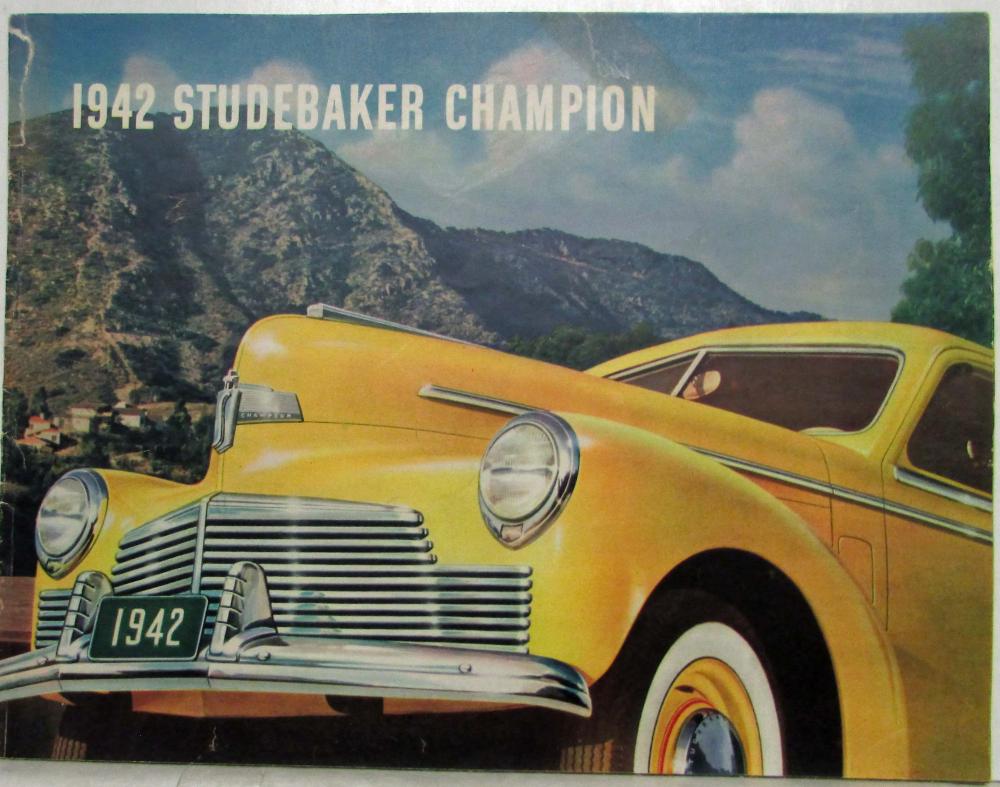
Front end of 1942 Studebaker in yellow
Studebaker produced just 9,285 passenger cars in 1942 before civilian automobile manufacturing came to an end. Material restrictions also brought significant changes to the vehicles' appearance. Chrome and other brightwork were eliminated or replaced with painted finishes as the government sought to conserve strategic materials, including chromium and nickel.
These changes resulted in what many automotive historians, including me, refer to as the 1942 "Blackout" models. The term reflects the distinctive appearance of these final production vehicles, which lacked much of the bright exterior trim associated with earlier Studebakers. The last cars built in January 1942 are particularly interesting to collectors because of these wartime styling changes.
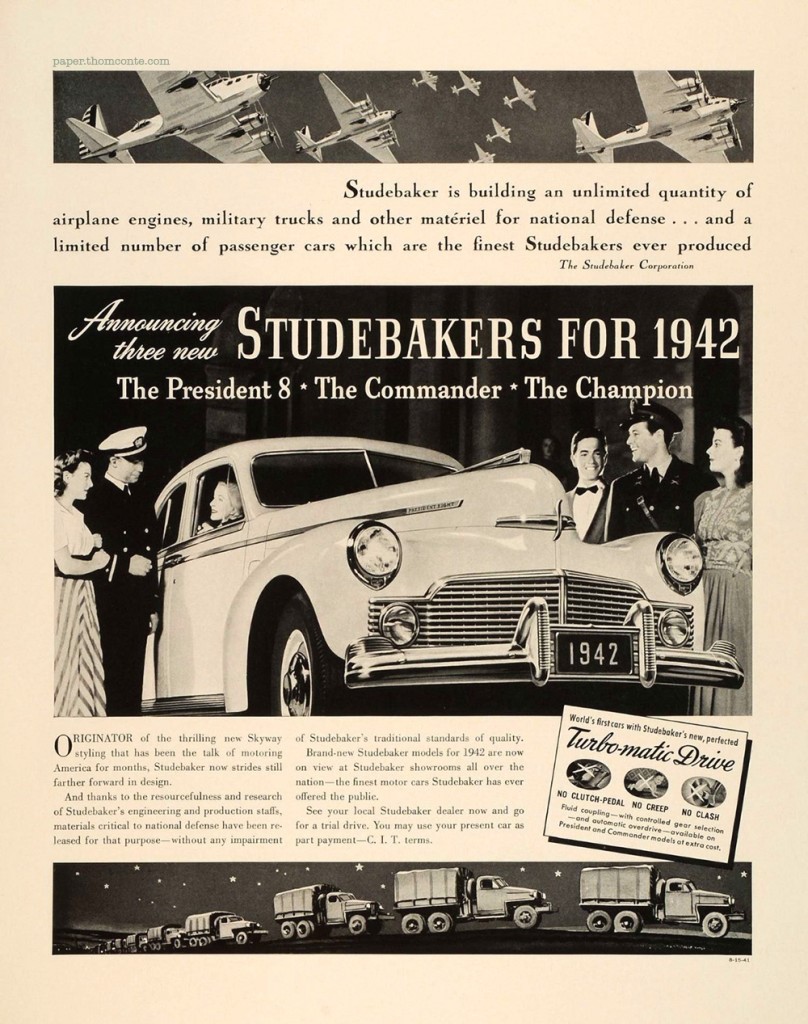
Another noteworthy development was Studebaker's experimental Turbo-Matic Drive. This innovative semi-automatic transmission combined a fluid coupling, an automatic clutch and a conventional three-speed transmission. Although it generated considerable interest, the system never entered regular production. Only six test vehicles were reportedly equipped with the experimental transmission, making it an interesting footnote in Studebaker's engineering history.
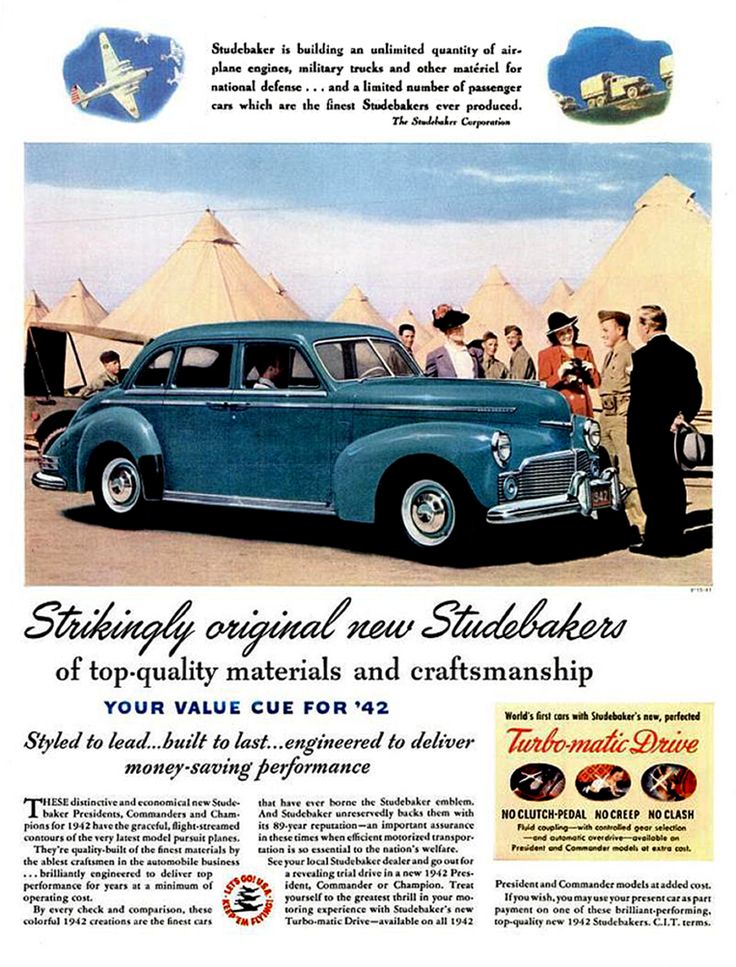
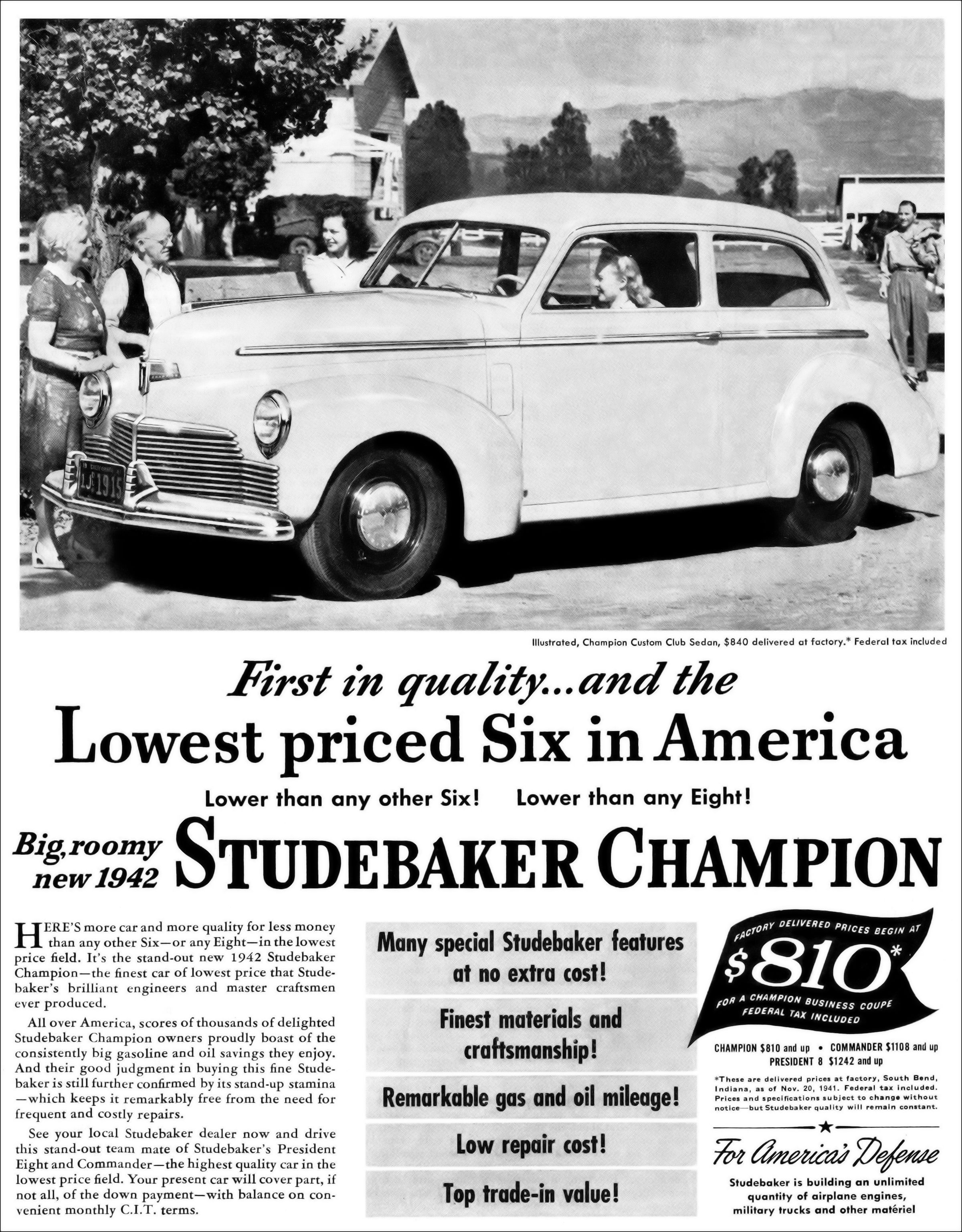
Following the United States' entry into World War II, civilian automobile production was brought to a halt as manufacturers shifted their resources toward military contracts. Studebaker's South Bend, Indiana, operations became an important part of the nation's wartime manufacturing effort. The company produced military trucks, aircraft engines for the Boeing B-17 Flying Fortress and the M29 Weasel, an amphibious cargo carrier used by Allied forces.
Studebaker's advertising during this period also reflected the patriotic spirit of the times, often connecting the company's automobiles and products with America's military personnel and the national war effort.
Though produced in limited numbers, the 1942 Studebakers marked a significant milestone in the company's history. They represented the final chapter of prewar automobile production and a remarkable transition from building passenger cars to helping support America's efforts during World War II.
For those of us who appreciate Studebaker history, these automobiles represent more than just the final models before wartime production. They are reminders of an extraordinary period in American automotive history and the important role Studebaker played during a time of national uncertainty and change.
Bibliography
Smithsonian Libraries, “From Horses to Horsepower” - click here
The National Archives of the United States 1934 Federal Register, volume 10, number 175
Automotive History Review, Volume 63, 2022 – click here
Rock River Valley Chapter of the Studebaker Drivers Club
Robert E. Bourke Loewy Associates - www.raymondloewy.org
Foster Patrick. “Studebaker The Complete History” MBI Publishing Company 2008.
Moloney H. James. “Studebaker Cars” Motorbooks International Publishers 1994.
Hall E. Asa & Langworth M. Richard. “The Studebaker Century A National Heritage” Dragonwyck Publishing Inc. 1983.