


By: Robert Tate, award-winning automotive historian and researcher
Images courtesy of Henry Ford Media Archives, GM Heritage Archives & Special Collections, Chrysler Corporation Historical Collection MMC Detroit, Robert Tate Automotive History Collection.
Edited by MotorCities National Heritage Area Staff
Published 08.05.2026
The 1950s brought more tail fins and chrome to automotive styling. Despite the discomfort and inconvenience associated with early automobile designs, the automobile gained popularity rapidly throughout the decade. More consumers visited automobile dealerships, and manufacturers introduced a wider variety of colors to attract women buyers. For example, in 1956, DeSoto offered colors such as Iridescent Lavender and Shell Pink to appeal to women purchasing new automobiles.
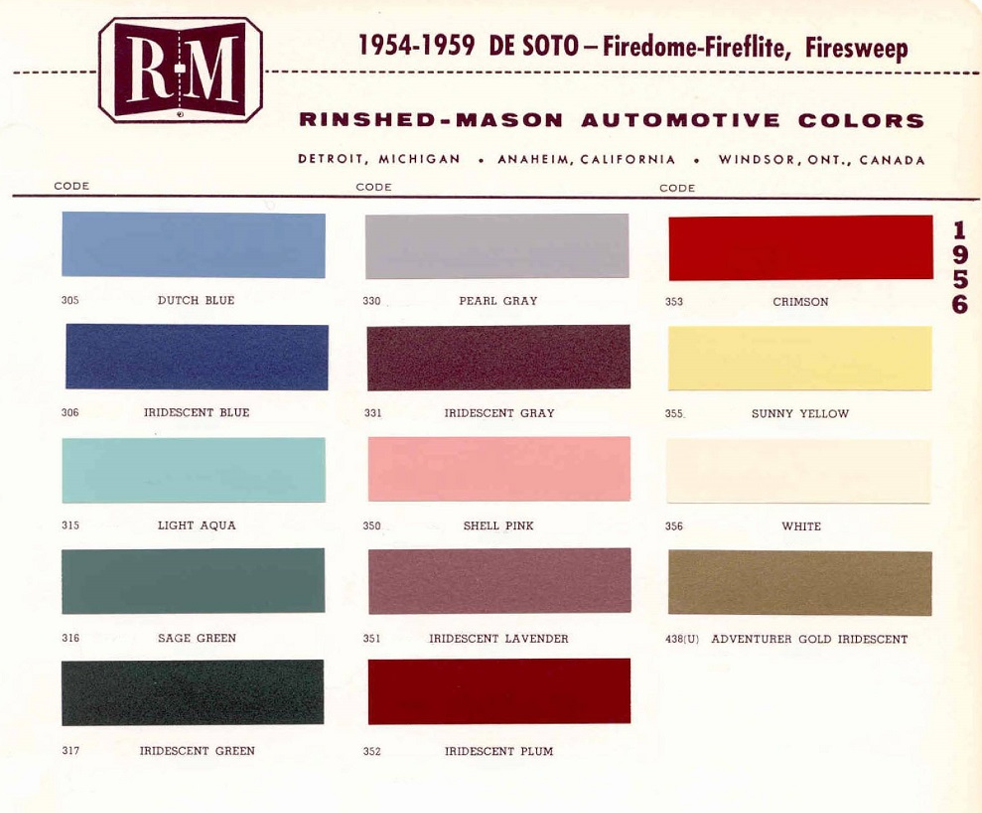
1956 DeSoto Color Chart
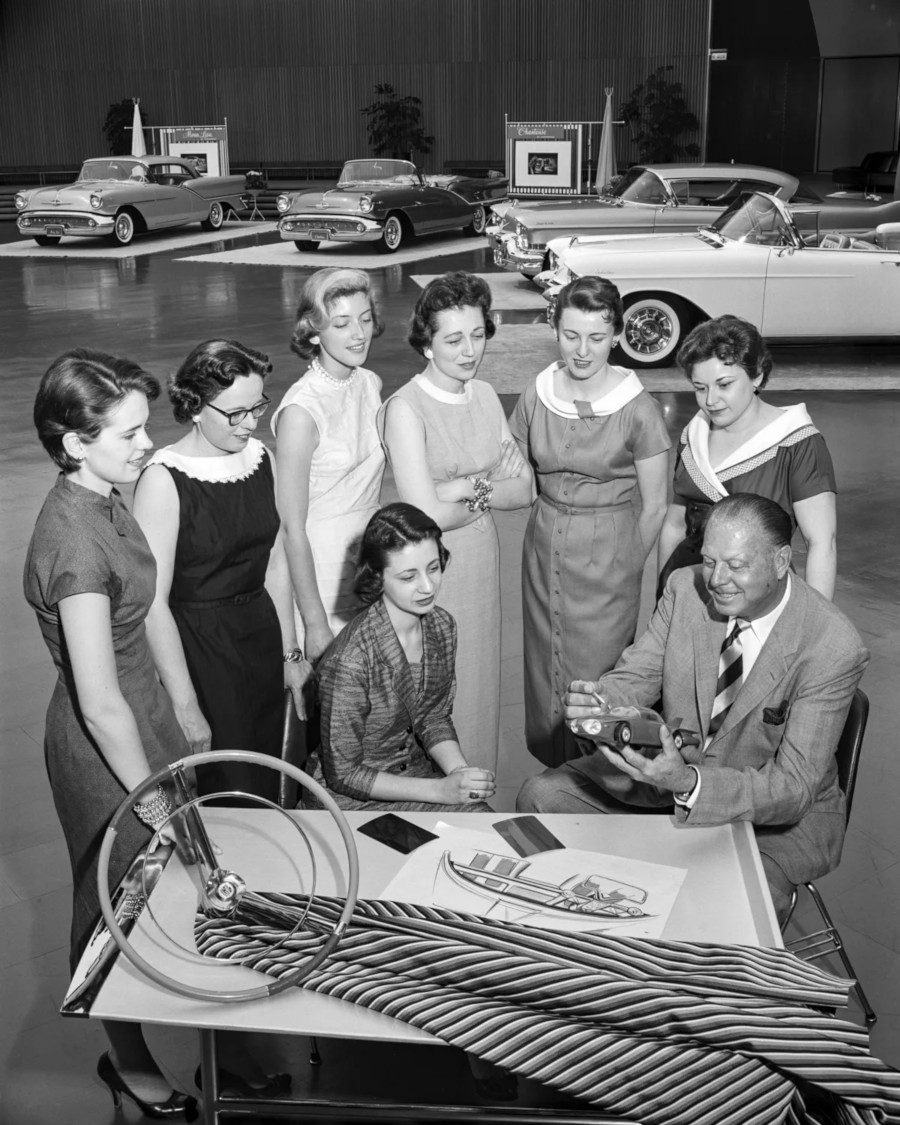
Harley Earl with GM Damsels of Design 1950s
During the early 1950s, General Motors Vice President Harley J. Earl employed the company's first group of women designers to help create automotive interiors. Many automotive historians have referred to them as the "Damsels of Design." Most of the women graduated from the Pratt Institute's Industrial Design program. During the 1950s, service station attendants commonly pumped gasoline, checked the oil, cleaned windshields, and provided other services while customers remained in their vehicles.
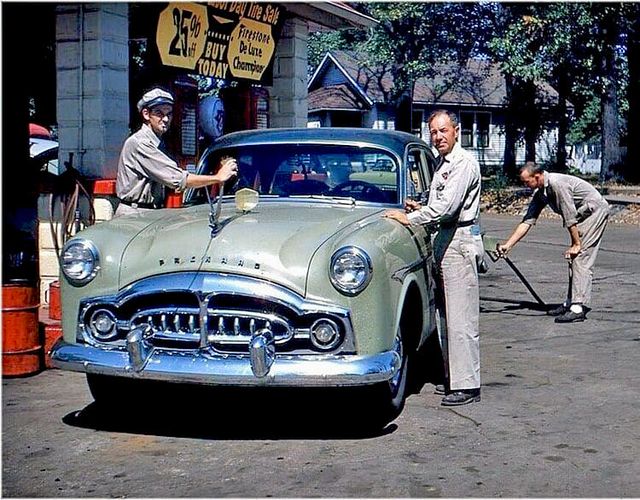
1950s Gas stations
In 1956, the federal government passed the Federal Aid Highway Act, authorizing the largest public works program in American history. Billions of dollars were invested in freeways, state highways, and the Interstate Highway System. In Detroit, the Edsel Ford Freeway, now part of Interstate 94, opened in 1953. The John C. Lodge Freeway also expanded during the 1950s. Throughout the decade, Americans took great pride in their automobiles.
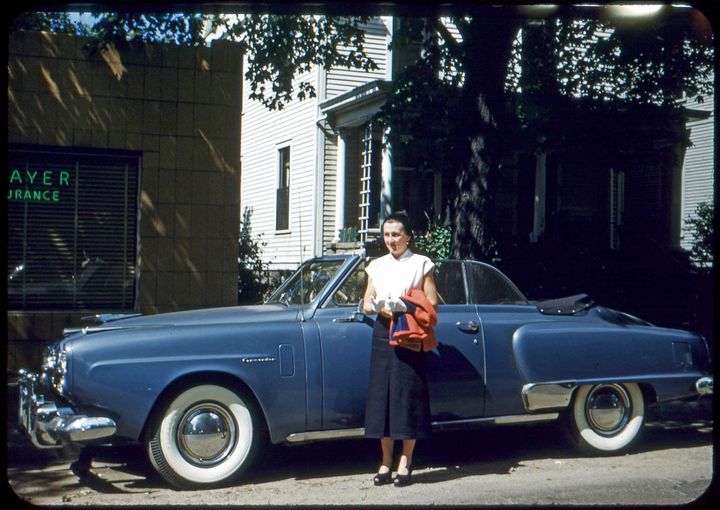
Studebaker owner standing next to her vehicle
Many Americans listened to Dinah Shore encourage them to visit their Chevrolet dealer, while Groucho Marx promoted DeSoto automobiles on television. From the drawing board to the driveway, Americans eagerly purchased new cars. One of the biggest automotive stories of the decade was the Rambler, which became America's first successful compact car of the modern era. During the early 1950s, Sears, Roebuck and Co. also sold the Allstate automobile, a rebadged Kaiser, although it failed to gain widespread popularity.
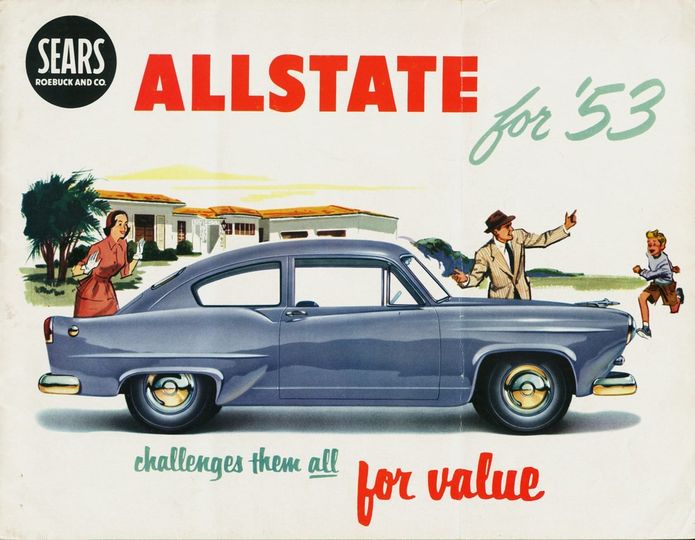
1953 Allstate automobile sales material.
Beginning with the 1955 model year, Chrysler introduced its "Forward Look" styling, which reflected the creative vision of Virgil Exner, the company's director of styling. His bold designs helped redefine Chrysler's image during the second half of the decade.
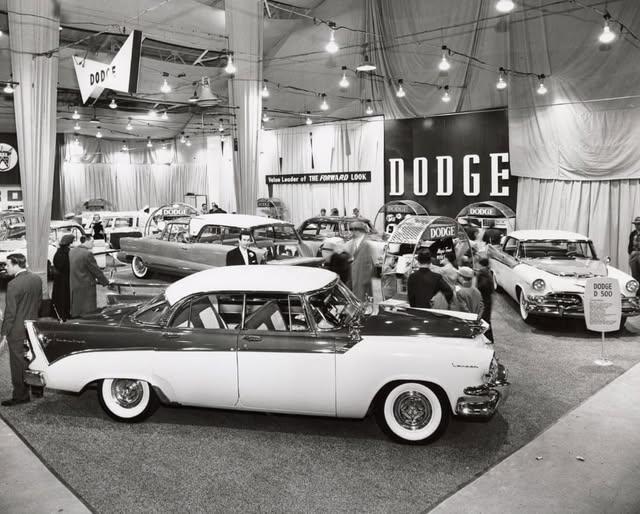
1956 Dodge at the Detroit Auto Show
Many automotive historians have called the 1950s the Golden Age of American automobiles. Several influential designers shaped the industry's future, including Virgil Exner, Raymond Loewy, Charles Jordan, Richard Teague, and Roy Brown. After World War II ended, Americans purchased more homes, and a new automobile often occupied the driveway as a symbol of prosperity.
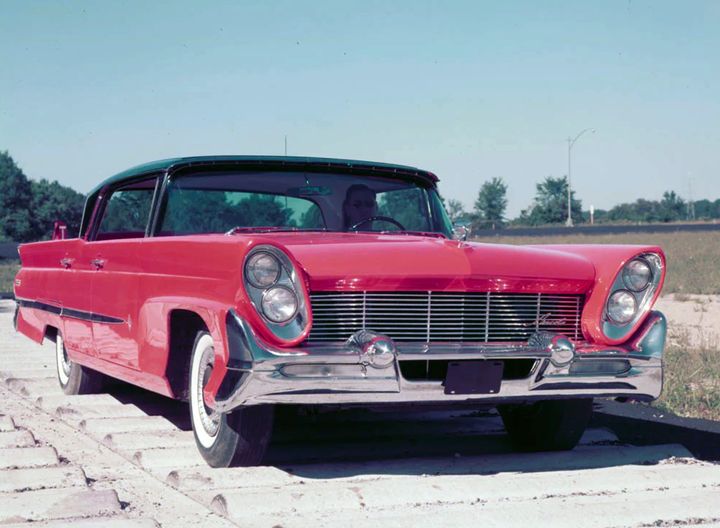
1958 Lincoln
My mother purchased her first home in 1953 for $12,000. Before I was born, she learned to drive on the Edsel Ford Freeway in 1954 in her new 1953 Ford sedan. The tail fin first appeared on the 1948 Cadillac. Its design was inspired by the Lockheed P 38 Lightning fighter aircraft used during World War II. The 1950s also marked the introduction of the Chevrolet Corvette, which General Motors debuted in 1953.
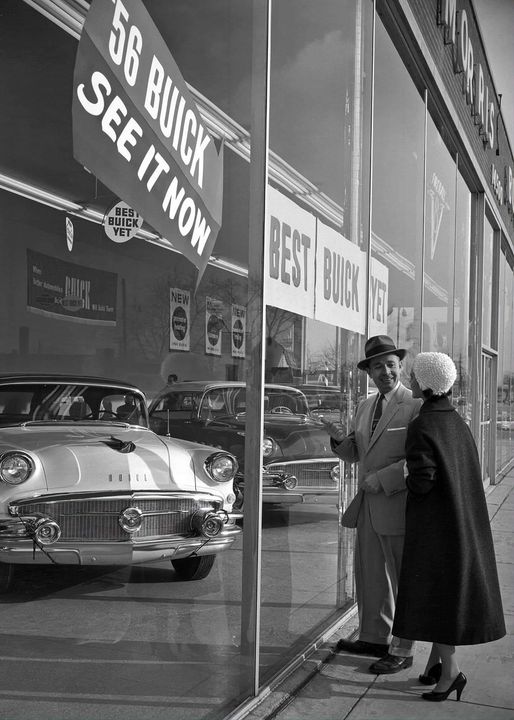
1956 Buick dealership window display.
In conclusion, the 1950s was a remarkable decade for automobile design. Popular models such as the 1955 through 1957 Ford Thunderbird and the 1955 through 1957 Chevrolet became favorites among American drivers. Some automotive historians have suggested that the 1950 Studebaker was designed to resemble an airplane, although not all consumers agreed with that interpretation. The automobile designs of the 1950s remain an important part of American history and continue to be admired by enthusiasts and collectors today.
Bibliography
Jeffrey Godshall/ Auto Editors of Consumer Guide. “Designing America’s Cars, the 50’s from Drawing board to Driveway” Publications international LTD. 2005.
The Center for Safety Education New York University.” Man, and the Motor Car” Sixth Edition 1962.
Flint Jerry. “The Dream Machine the Golden age of American Automobiles 1946-1965” The New York Times Book Company 1976.