

By: Robert Tate, award-winning automotive historian and researcher
Images courtesy of Packard Archives/Detroit Free Press
Edited by MotorCities National Heritage Area Staff
Published 08.12.2026
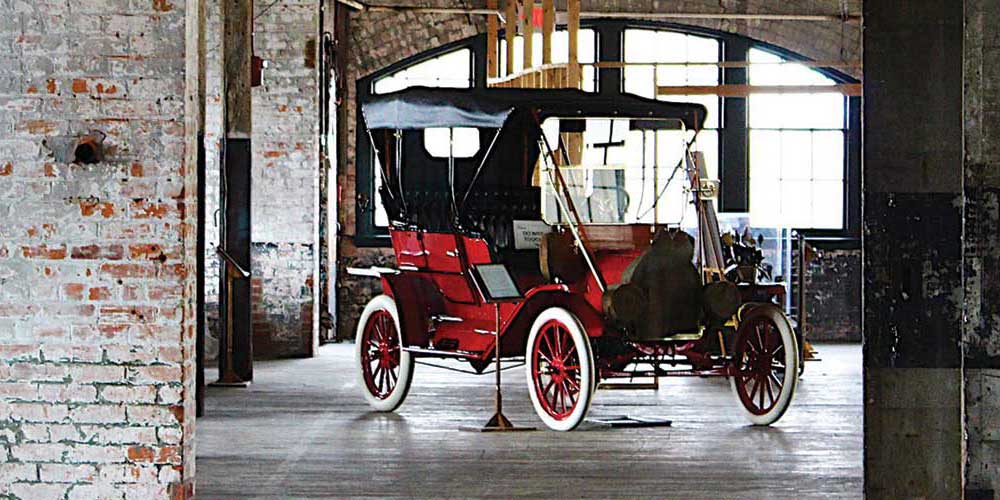
Packard's great automotive history started in the 1800s, when the automobile was beginning to take the place of the horse and buggy as a form of transportation in America. The first Packard automobile was completed on Nov. 6, 1899, in Warren, Ohio. The following day, the new automobile was successfully tested and reportedly reached a speed of 35 mph. Many automotive historians have called the Packard nameplate "truly one of America’s magnificent and great icons.”
In 1898, James Ward Packard purchased a Winton automobile built by Cleveland auto pioneer Alexander Winton. Packard was not satisfied with the automobile and offered suggestions for improvements. That experience helped inspire Packard and his brother, William Doud Packard, to develop their own automobile. In 1899, they completed their first automobile in Warren, Ohio. The Packard name would eventually become one of America's most respected automotive marques.
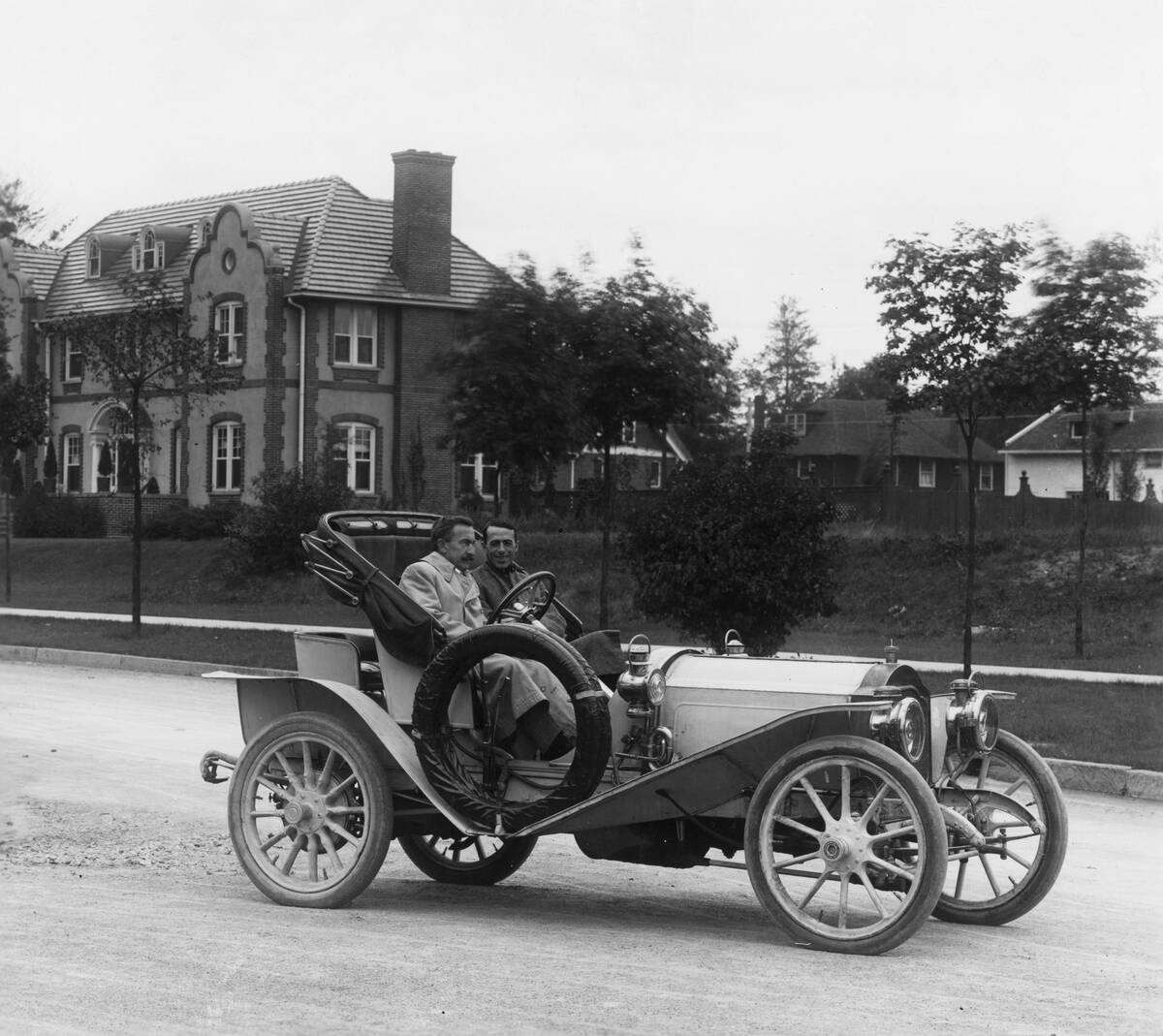
Early Packard automobile with William Doud Packard.
For many years, the Packard automobile was an American icon on wheels that many Americans admired and enjoyed. Recently, I drove by the old Packard building in Detroit and saw the demolition of the Packard factory along with other buildings. I said to myself that Packard history is now just dust in the wind.
Looking back during the early days of the company, Packard also produced trucks. Truck production began in the early 1900s and continued for many years. By the 1920s, Packard management was also paying close attention to the growing interest in family automobiles and changing consumer tastes.
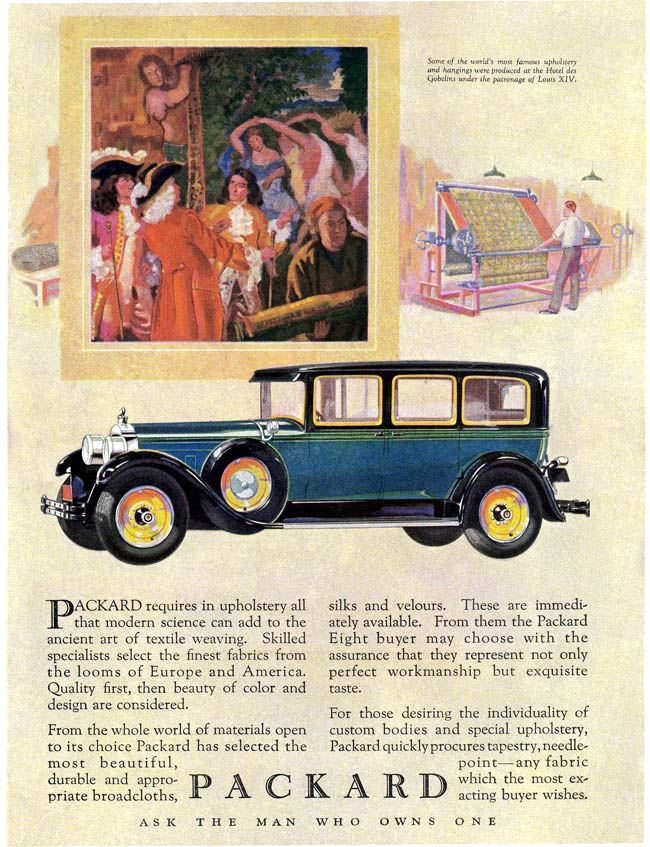
Early 1920s Packard automotive illustration.
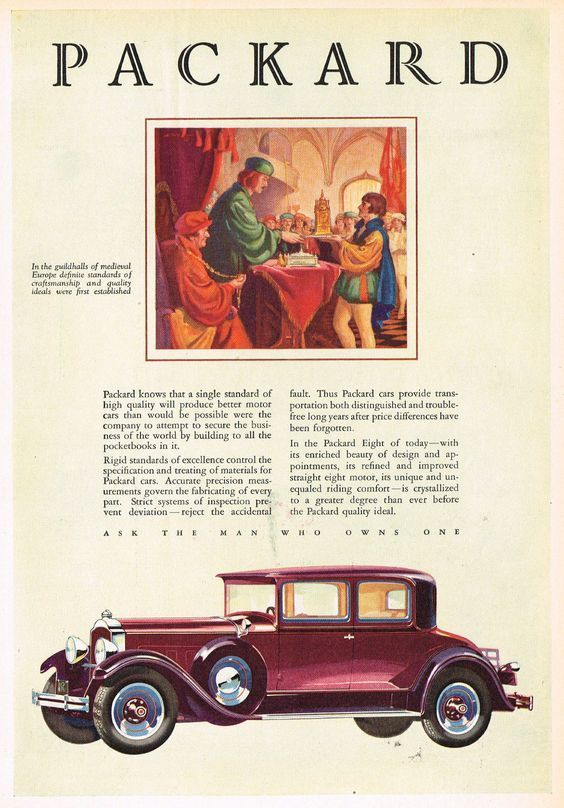
Early 1920s Packard Eight illustration.
For 1920, Packard offered the Twin Six Duplex Coupe at a price of $7,750, making it a very expensive automobile that was far beyond the reach of most middle class families. During the 1920s and 1930s, the Packard Motor Car Co. used colorful and attractive advertising to bring customers into Packard dealerships. Throughout these decades, Packard automobiles were known for quality, craftsmanship and distinctive styling.
In 1930, Packard found itself facing the growing effects of the Great Depression. The 1930s brought new styling and a variety of special bodied automobiles. Among them were elegant Packards with coachbuilt bodies from firms such as Rollston. These automobiles demonstrated the high level of craftsmanship associated with the Packard name.
In 1941, Packard introduced the Clipper, an automobile with modern styling that represented a major change for the company. Many automotive historians have said that the Clipper “was a total departure from anything that had ever emanated from the ultra-conservative plant on East Grand Blvd.” The Clipper was an immediate success, with approximately 16,600 built during the 1941 model year.
World War II changed the American automobile industry. Packard's last 1942 automobile was produced on Feb. 9, 1942. Civilian automobile production was then halted as American manufacturers turned their attention to wartime production. Packard went on to produce military equipment, including marine and aircraft engines, during the war.
The war ended in 1945, and automobile production gradually resumed. Packard returned to the market with models based heavily on its prewar designs. The company continued to update those automobiles during the immediate postwar years. By 1948, however, Packard introduced a substantially restyled line that carried its basic design theme through the 1949 and 1950 model years. The styling received mixed reactions as the industry moved toward more modern postwar designs. Packard's next major redesign would arrive for 1951.
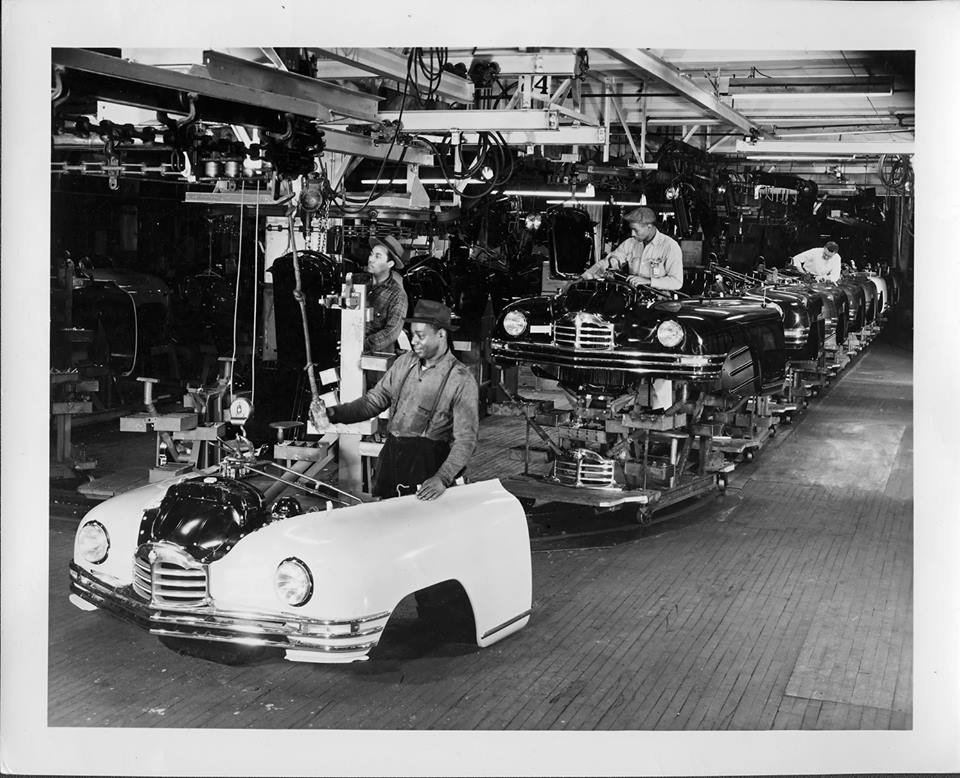
Packard assembly line 1948 with Packard workers.
The 1948 to 1950 Packards represented an important transition period for the company. John Reinhart, who served as Packard's chief stylist from 1947 to 1951, was closely involved with the development of these designs. Reinhart and the Packard styling team worked with existing Clipper body structures to create the 1948 models while giving the cars a new postwar appearance.
In 1951, Packard introduced a completely new design for the automotive market. The new Packard models featured a more modern appearance and represented a significant departure from the company's late 1940s styling. John Reinhart played an important role in the development of the 1951 design during his time as Packard's chief stylist. Later, Richard Teague became an important part of Packard's styling program and would play a major role in several of the company's memorable designs.
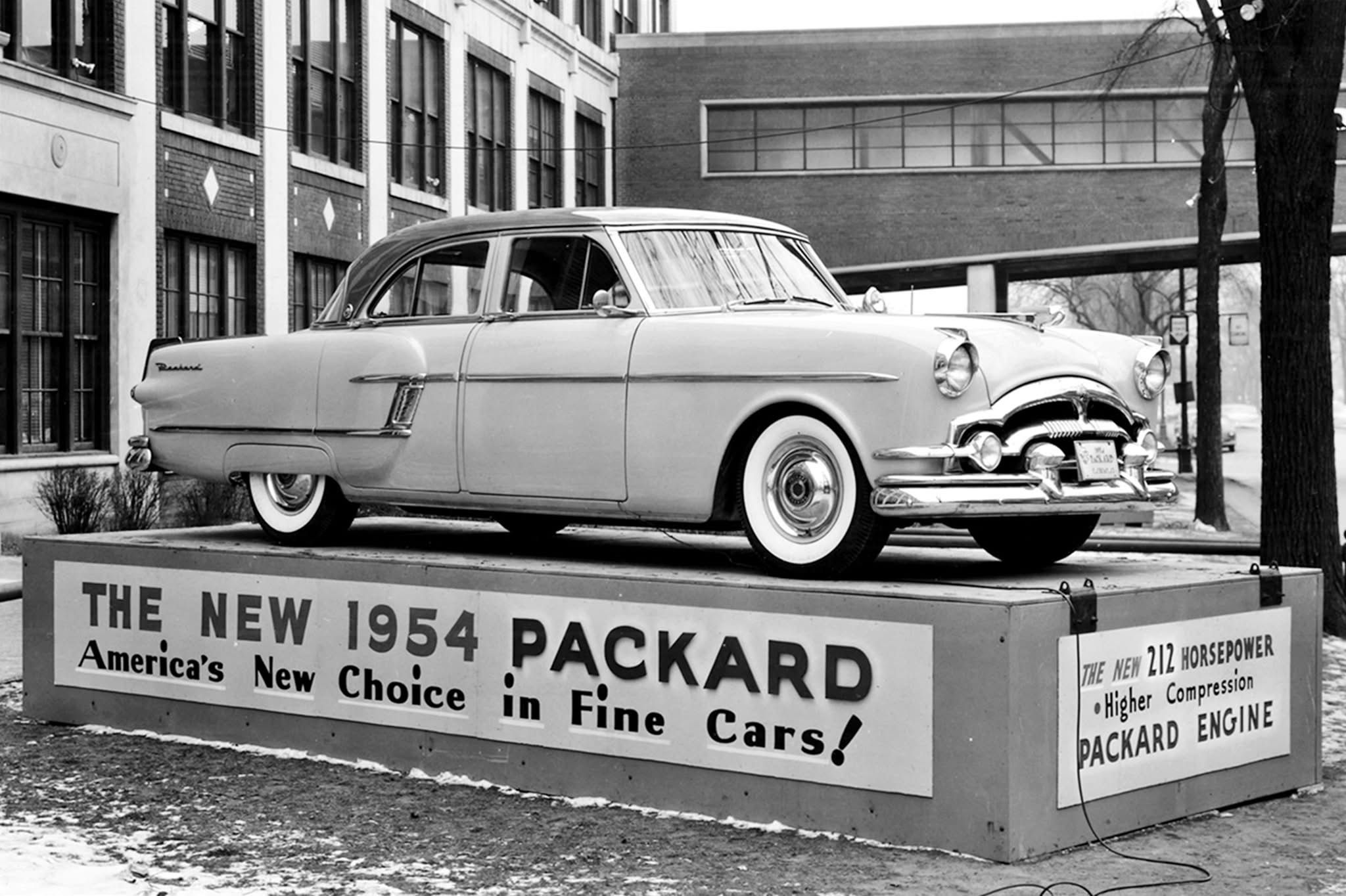
New 1954 Packard model on display.
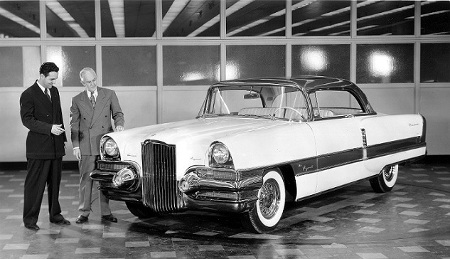
Packard designer Richard Teague looking at the “Request” show car.
The auto industry was changing rapidly, and on Oct. 1, 1954, the Studebaker Packard Corp. was formed. On the Packard side, the 1955 models looked great! Richard Teague, who was a great friend of mine, was responsible for much of the styling that made the 1955 Packards' so memorable. The 1955 models were well received, although Packard's financial situation remained difficult.
Richard Teague would also be responsible for the Packard Request and later the Packard Predictor, one of the company's most memorable show cars. The Predictor received considerable press and media attention. The show car featured push button controls, retractable roof panels, a retractable rear window and concealed headlamps. The Predictor was designed by William Schmidt and Richard Teague for Packard and was built by the Italian coachbuilding firm Ghia.
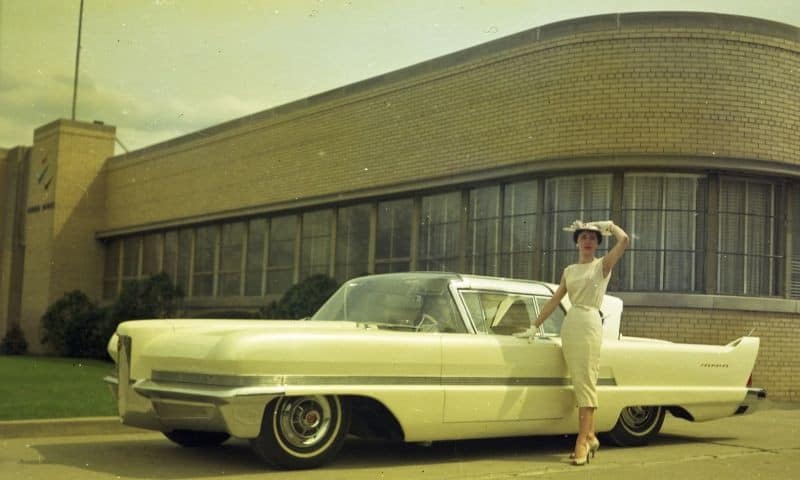
Packards final show car the 1956 “Predictor.”
By 1958, the auto industry was changing rapidly, and Packard's financial difficulties had become increasingly serious. The Packard nameplate disappeared after the 1958 model year. Studebaker continued automobile production after the Packard name was discontinued, but the company eventually ended vehicle production in Canada. The last Studebaker automobile left the company's Hamilton, Ontario, plant on March 17, 1966. This marked the end of Studebaker automobile production.
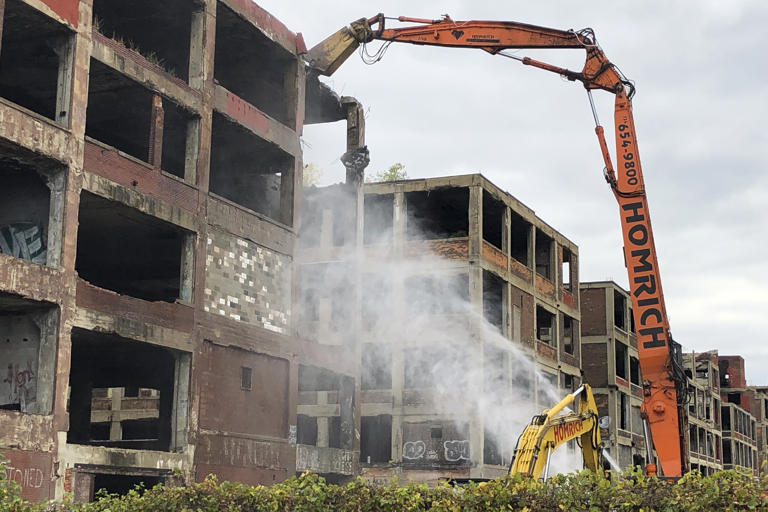
Packard Plant undergoing demolition.
In conclusion, Packard's automotive history is very interesting and will always be an important milestone in our automotive heritage and history for many generations to come. Packard may be gone from the streets of America, but its legacy continues through the automobiles, designs and memories it left behind.
Bibliography
Dammann H. George & Wren A. James. “Packard” Motorbooks International 1996.
Kimes Rae Beverly. “Packard A History of the Motor Car And The Company” Editors of Automobile Quarterly Magazine Princeton Publishing 1978.
Jr. Einstein W. Arthur. “Ask the Man Who Owns One” 2010 McFarland & Company Inc.