

By: Robert Tate, award-winning automotive historian and researcher
Courtesy of- GM Heritage Archives & Special Collections
Edited by MotorCities National Heritage Area Staff
Published 6.10.2026
The Cadillac Seville was introduced to the public on May 1, 1975. Some automotive historians suggest that the design and development of the Seville were influenced by the Arab Oil Embargo and the growing emphasis on fuel economy. General Motors promoted the new model with the slogan, “Seville is here. A new expression of Cadillac excellence.”
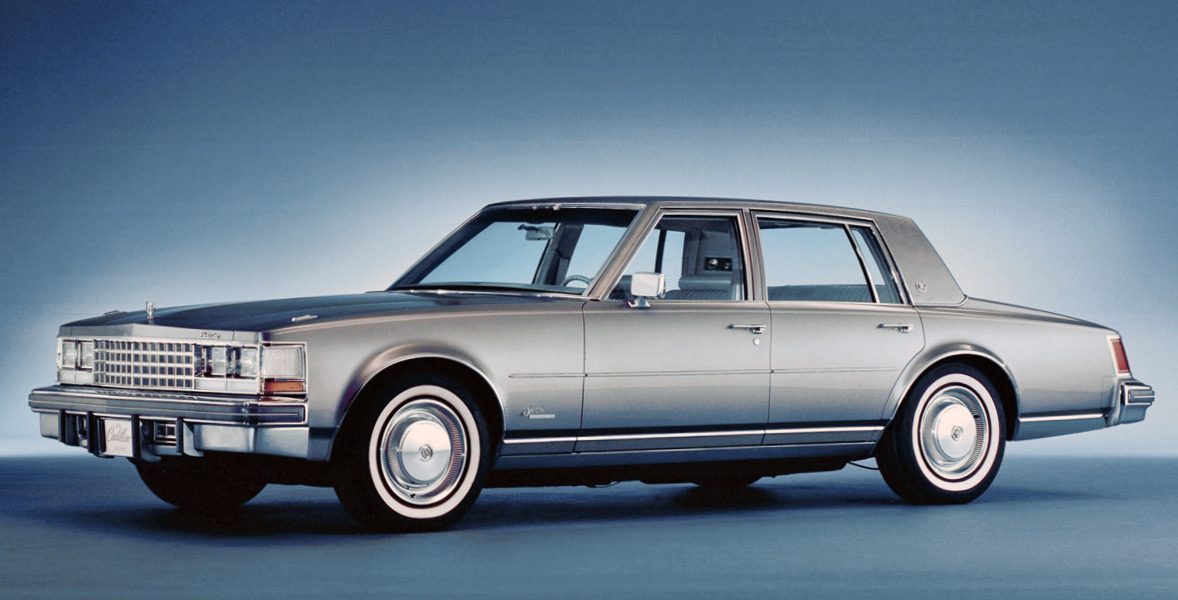
1975 Cadillac Seville Blue model sales material.
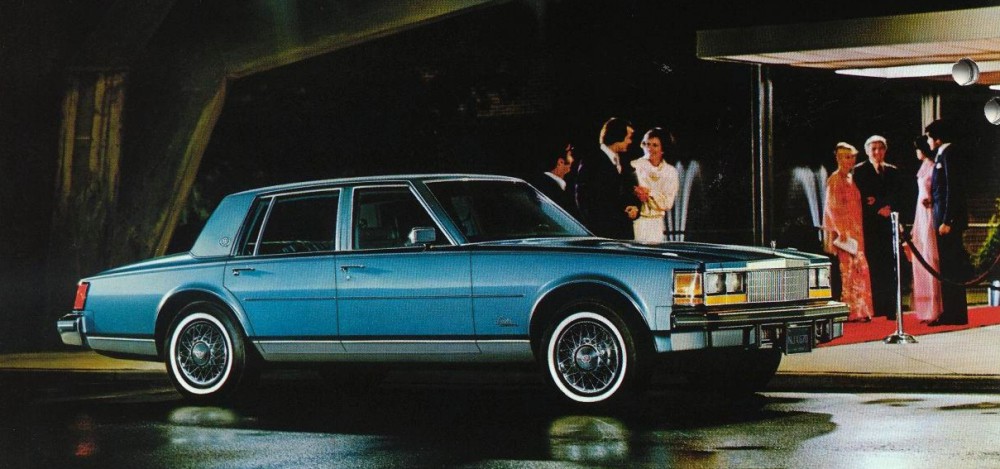
1975 Blue Cadillac Seville with couple-sales material.
The Cadillac Seville was developed under the direction of Bill Mitchell, Cadillac's chief designer. Other key contributors included Jack Humbert, Irvin Rybicki, Wayne Kady, and Stan Parker, all of whom were part of the Cadillac design studio. From the outset, the Seville was conceived and designed as a four-door sedan.
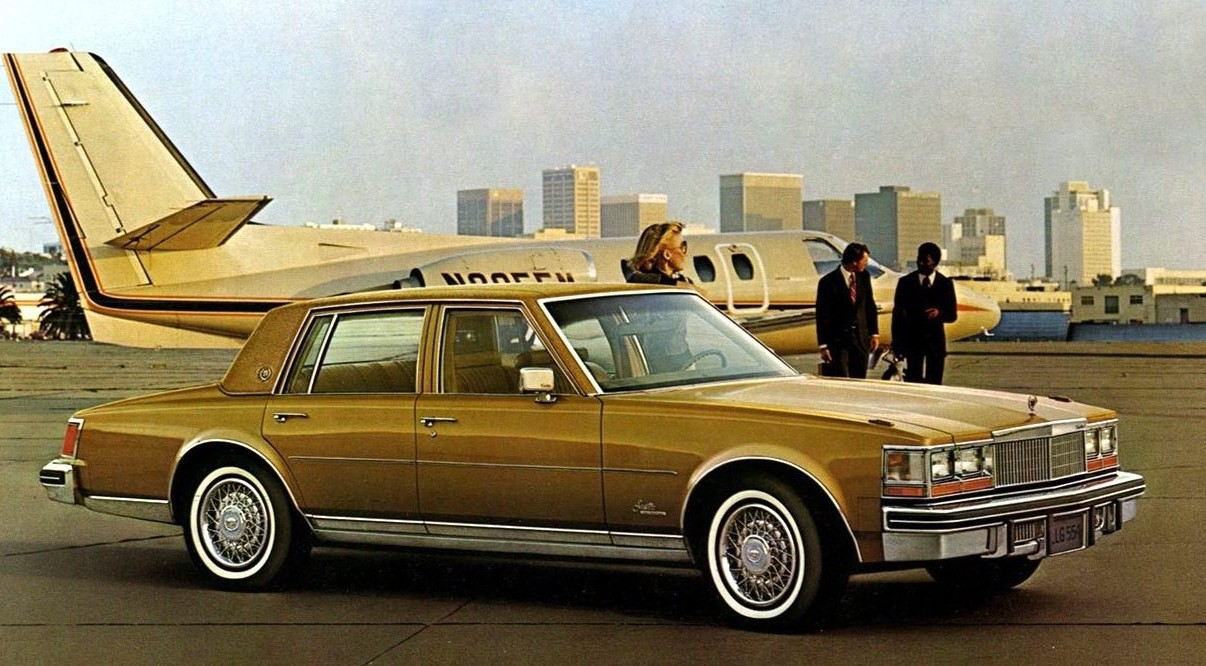
1975 Brown Cadillac Seville with airplane in background.
Bob Templin, who was a part of the marketing team said “We want to conquest the guy who’s buying the foreign imports, or luxury cars of some other description. If you’re going to do any new car, you do a coupe traditionally. It has a bigger appeal and would make the car appeal more to the younger buyer.”
The Cadillac Seville featured a distinctive grille with an egg crate design, squared quad headlights, and a classic padded vinyl roof. Upon its introduction, the model quickly became a success in the automotive industry. The Seville offered a range of premium features, including air conditioning, automatic level control, power seats, and a choice of leather or finely tailored cloth upholstery. These amenities made the vehicle especially appealing to consumers.
In 1975, Cadillac produced 16,355 Seville models, each carrying a base price of $12,479. Buyers were drawn to the car's elegant styling and luxury features. During the development process, Cadillac considered using the name "Leland" for its new compact luxury sedan. However, company executives felt that most consumers would not recognize the name of Cadillac's founder, Henry Leland. As a result, the Seville name was selected for the new model.
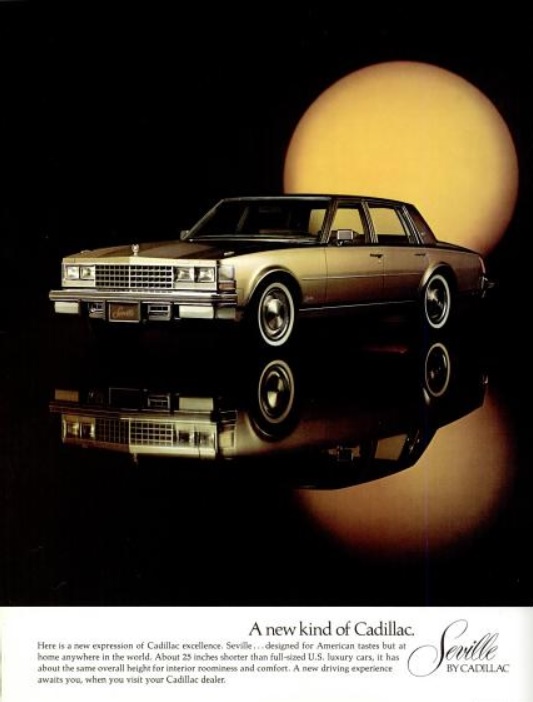
1975 Cadillac advertising “A new kind of Cadillac.”
The first-generation Cadillac Seville was introduced in 1975 and remained in production through 1979. In 1980, Cadillac unveiled the all-new second generation Seville. For 1976, the Seville received very few design changes, yet it remained highly popular with consumers. The model gained a strong reputation in the luxury car market and became an increasingly competitive alternative to Mercedes-Benz. Following its successful debut in 1975, Cadillac increased production significantly and manufactured 43,772 Seville models for the 1976 model year.
The Cadillac Seville continued its success in 1977. Buyers could choose between a standard color keyed padded vinyl roof or a painted metal roof, both of which proved popular with customers. For 1977, Cadillac revised the front grille design and included air conditioning and enhanced automatic level control as standard equipment. These features further strengthened the Seville's appeal in the luxury sedan market.
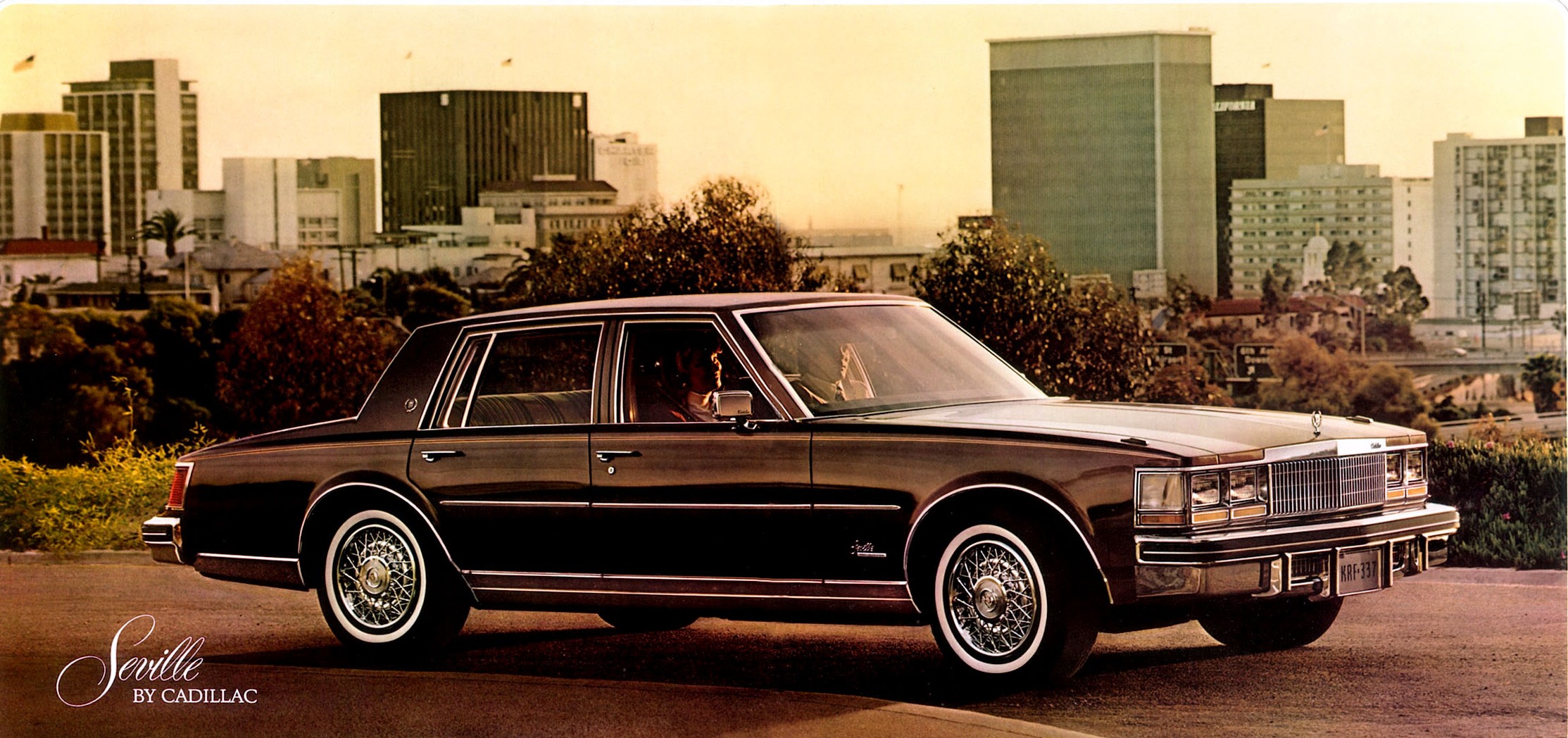
1977 Cadillac Seville “Seville by Cadillac.”
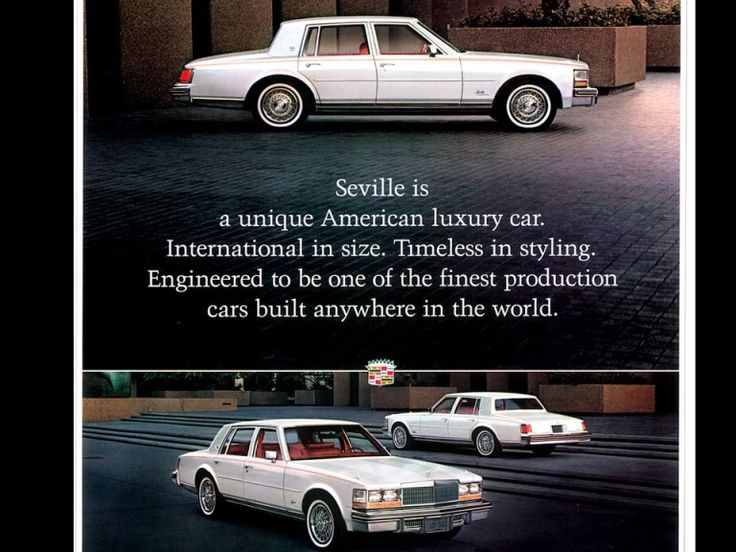
1979 Cadillac Seville “Seville is a unique American luxury car.”
In 1978, Cadillac's highly successful downsized models received only minor styling updates. However, several new engineering features and options were introduced for the model year. The Seville continued to perform well in the marketplace and remained a popular choice among luxury car buyers.
The 1979 model year marked the end of the first-generation Cadillac Seville. Although the Seville faced increasing competition from the all new Eldorado Coupe, which shared the same wheelbase, consumer demand remained strong. Cadillac offered two versions for 1979: the standard Seville and the upscale Seville Elegante. Both models sold well and helped conclude a successful production run. Today, many enthusiasts and collectors have fond memories of the 1975 through 1979 Cadillac Seville, which remains an important part of Cadillac's heritage and history.
Biography
Mc Call M. P. Walter. “80 Years of Cadillac La Salle” Crestline Publishing 1988.
Hendry D. Maurice. “Cadillac Standard Of The World The Complete History” Bonanza Books New York 1979.
The Editors of Consumer Guide. “Cadillac Standard of Excellence 1903-1980”. Consumer Guide magazine Classic Car Bimonthly July 1980 Volume 277.