
By Robert Tate, Award-Winning Automotive Historian/Researcher
Images Courtesy of the International Truck Archives Collection/Robert Tate Collection
Published 12.17.25
During the 1940s, International Metro delivery trucks became a staple for American merchants, helping businesses thrive in a rapidly evolving economy. The International Harvester Company’s product line was highly successful during this era, particularly among farmers and small business owners.
The origins of International trucks trace back to 1902, coinciding with America’s transition into the industrial age. One of the first Metro delivery trucks debuted in 1938, featuring a cargo area measuring nine feet long, 68 inches wide, and 62 inches high. Among the early models was the D-15-M, often used as a dairy truck—a design admired by store owners for its practicality.
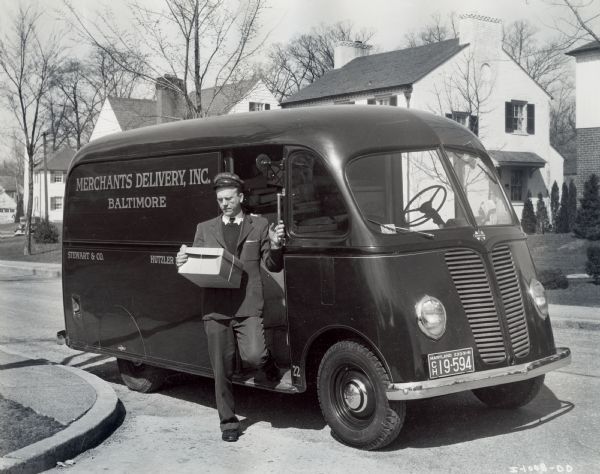 Merchant's Delivery Truck
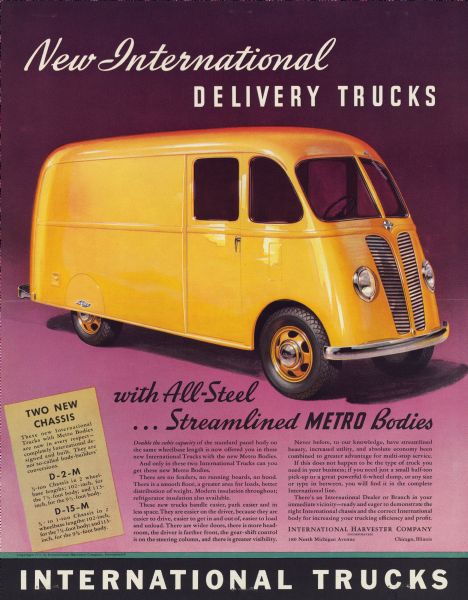 International Trucks Ad
A defining characteristic of the Metro trucks was their distinctive styling: a split grille, teardrop-shaped headlamps, and a large V-shaped windshield, all hallmarks of the 1938–1940 models. These design elements were the work of renowned industrial designer Raymond Loewy (1893–1986), best known for his contributions to Studebaker. Manufactured in Bridgeport, Connecticut, the Metro vans were step vans—also called walk-in or multi-stop delivery trucks—designed for convenience, allowing drivers to stand or sit while operating the vehicle.
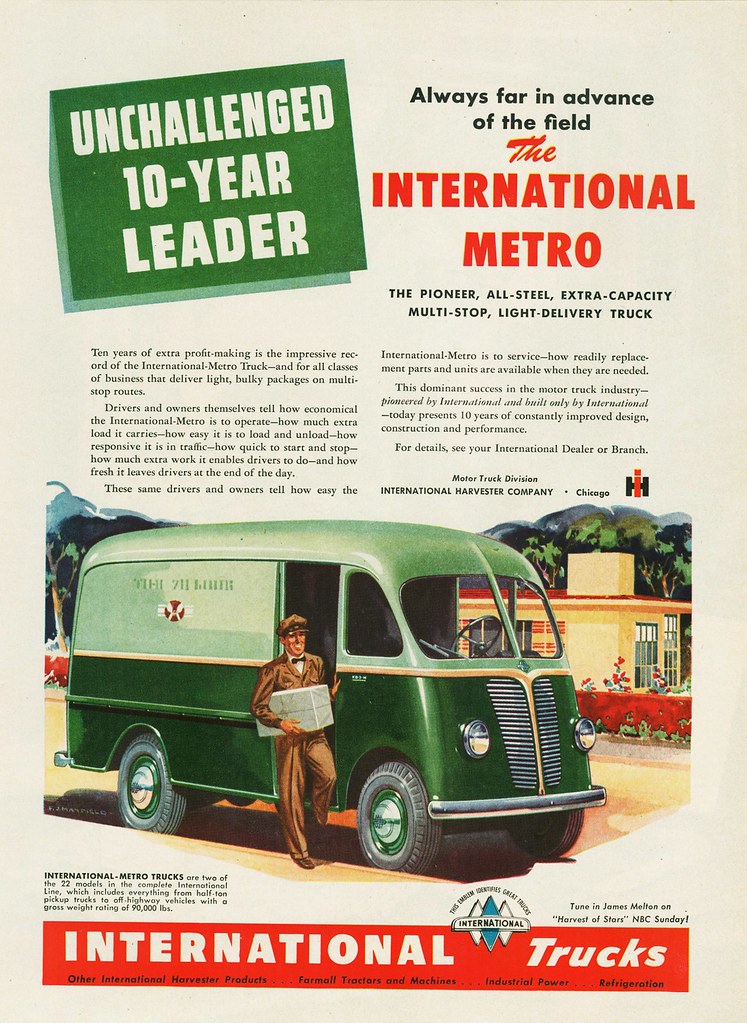 Celebrating 10 Years Unchallenged

During World War II, Metro trucks served critical roles, including American Red Cross operations and ambulance services for U.S. troops. They were also used as shuttles for Navy personnel. After the war, production resumed for commercial use, and the trucks gained even greater popularity among merchants. Some models were even adapted into shuttle buses for urban transportation.
In 1949, International introduced a redesigned Metro model featuring a 1½-ton version with a 12-foot cargo area, offering expanded capacity for growing businesses.
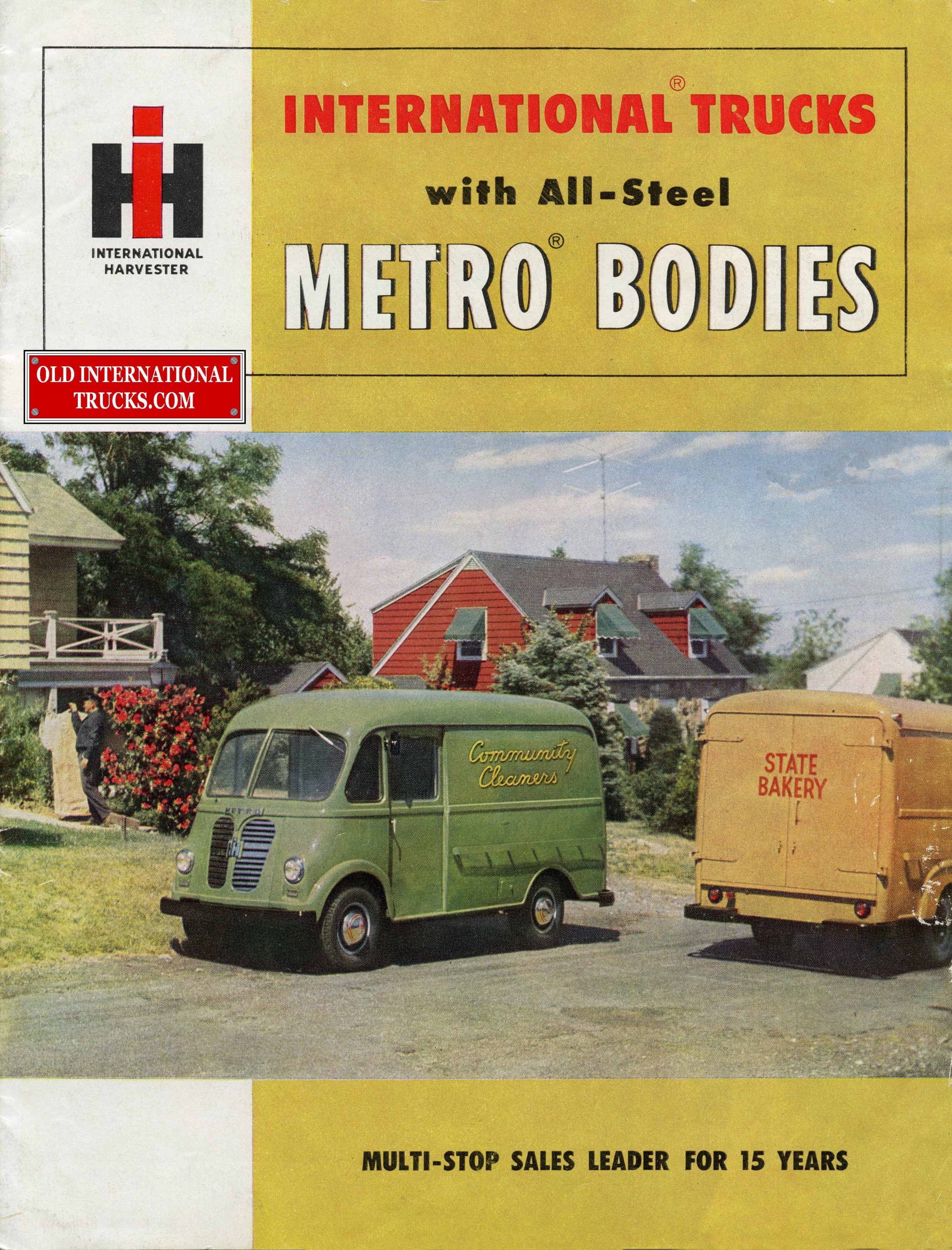
However, a 1953 redesign introduced a more aerodynamic front end that many customers found less appealing than the classic look.
By 1958, International launched the Metro-Mite—also known as the AM-80—marketed as “America’s Biggest Little Delivery Truck.” This model competed with the Volkswagen Transporter, boasting superior load capacity. Through the 1960s and 1970s, the truck industry evolved, and by 1975, the Metro name was retired. Nevertheless, these vehicles had played a pivotal role in American commerce for decades.
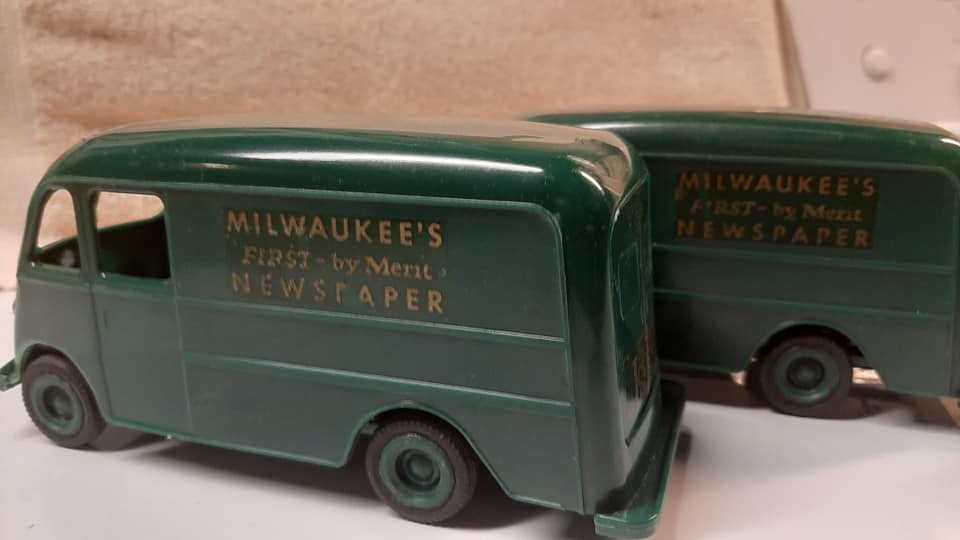
Interestingly, in 1949, the Product Miniature Company produced a toy replica of the Metro truck for the retail market. This collectible, molded in green plastic and representing Milwaukee’s First-by Merit Newspapers, is now highly sought after, often commanding prices between $500 and $600.
________________________________________
Bibliography
• Crismon, W. Frederick. International Trucks. Motorbooks International, 1995.
• Foster, R. Patrick. International Harvester Trucks: The Complete History. Quarto Publishing Group USA, 2015